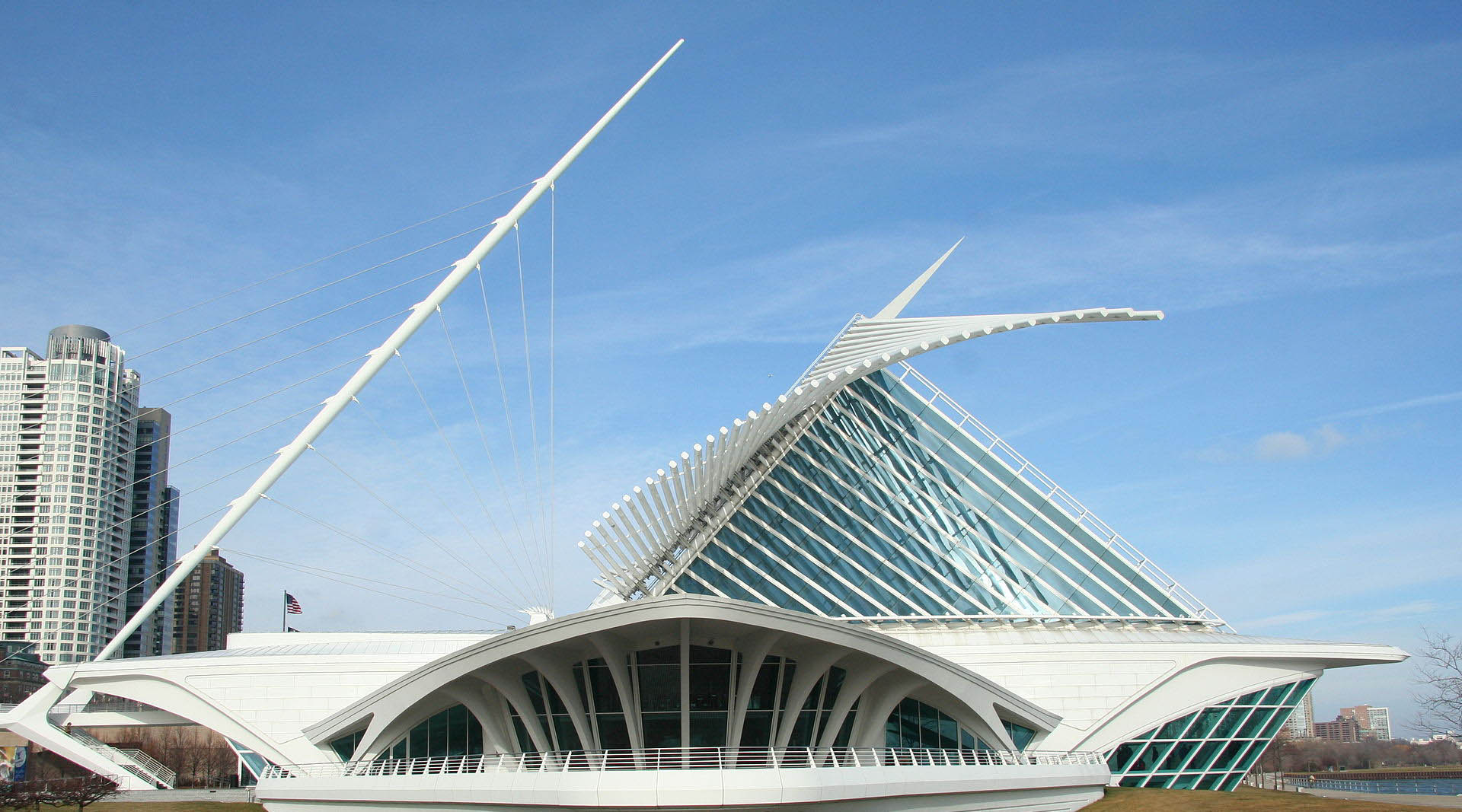
On the shore of Lake Michigan in downtown Milwaukee, a building that looks like a great white bird about to take flight has become one of the most recognizable pieces of architecture in the United States. The Milwaukee Art Museum, anchored by Santiago Calatrava’s extraordinary Quadracci Pavilion addition, is a world-class art institution that would be worth visiting for the collection alone. Add in the stunning building, the lakefront location, and the quality of the overall visitor experience, and you have one of the finest cultural destinations in the Midwest.
The Calatrava Addition
The Quadracci Pavilion, opened in 2001, is what most people picture when they think of the Milwaukee Art Museum. Spanish architect Santiago Calatrava, known for his organic, engineering-driven forms, designed a structure that seems to defy the usual categories of building. The pavilion’s most dramatic feature is the Burke Brise Soleil, a movable sunscreen made of 72 steel fins that span 217 feet and can open and close like a bird spreading and folding its wings. The fins open in the morning when the museum opens and close at midday and at closing time, and watching the transformation is a genuinely theatrical experience that draws crowds of observers. The opening sequence takes about 3.5 minutes and has become one of Milwaukee’s most distinctive daily rituals.
Inside the Quadracci Pavilion, the architecture continues to impress. The reception hall beneath the brise soleil is flooded with natural light when the fins are open, creating a dramatically bright and airy space accented by the structural cables and ribs of the roof. A pedestrian bridge extending from the pavilion over Lincoln Memorial Drive connects the museum to the lakefront, further emphasizing the building’s relationship with the water. Even visitors who have no particular interest in art find themselves lingering in the pavilion simply to appreciate the space.
The Art Collection
The Milwaukee Art Museum’s collection spans more than 30,000 works of art across virtually all periods and media. The museum’s strengths include its exceptional collection of German Expressionism, one of the finest outside Germany, as well as American decorative arts, folk art, and a superb collection of works from the 19th and early 20th centuries. The Haitian art collection is particularly noteworthy, comprising one of the largest and most significant collections of Haitian paintings and sculpture in the world.
European Old Masters, contemporary American art, photography, prints and drawings, and a substantial collection of works on paper round out the permanent holdings. The galleries are well-designed and thoughtfully curated, with room for both focused study and casual appreciation. The collection is large enough to reward multiple visits but not so overwhelming that a single day feels inadequate. New visitors often find themselves pleasantly surprised by the breadth and quality of what the museum holds.
Special Exhibitions
The Milwaukee Art Museum hosts a rotating program of special exhibitions that bring major loan shows and focused thematic presentations to Milwaukee throughout the year. These exhibitions have covered everything from major retrospectives of well-known artists to explorations of specific periods, movements, or subjects in art history. The quality of the special exhibition program has grown significantly in recent years, and the museum now regularly presents shows that would be at home in any major metropolitan museum. Checking the schedule before your visit and planning your trip around a special exhibition you’re excited about is a good strategy for maximizing the experience.
The Eero Saarinen Building
Before Calatrava, there was Eero Saarinen. The Milwaukee Art Museum’s main gallery wing was designed by the Finnish-American architect Eero Saarinen and opened in 1957. Saarinen’s building, now known as the Kahler Building, is a handsome modernist structure that anchors the museum complex on the lakeside. It houses many of the museum’s most important permanent collection galleries and is a significant architectural work in its own right. Together, the Saarinen building, the earlier War Memorial addition, and the Calatrava pavilion form a complex that is itself a kind of survey of 20th and 21st-century architectural achievement.
Dining, Shopping, and Amenities
The museum has a well-regarded restaurant and cafe with views over the lake that make it a pleasant stop for lunch or a light meal during your visit. The museum shop carries a thoughtful selection of art books, prints, gifts, and jewelry reflecting the collection and special exhibitions. The overall visitor experience at the Milwaukee Art Museum is polished and welcoming, with attentive staff, clear navigation, and good facilities throughout the building.
The Lakefront Setting
The museum’s location on Lake Michigan is a genuine asset. The lakefront promenade along Veterans Park and the adjacent Milwaukee Riverwalk provide beautiful walking routes before or after a museum visit. The Calatrava pedestrian bridge leads directly to the lakefront path, making it easy to transition from the museum to an outdoor walk along the water. In summer, the lakefront area fills with people enjoying the beach, the marina, and the many events that take place along Milwaukee’s lakeside parks.
Getting There and Practical Details
The Milwaukee Art Museum is located at 700 North Art Museum Drive in downtown Milwaukee, on the lakefront just east of Lincoln Memorial Drive. It’s accessible by car, with parking available in museum lots and in surrounding downtown garages. The Milwaukee County Transit System buses serve the area, and the museum is bikeable from most of downtown Milwaukee. Hours vary by day of the week, and the museum is closed on Mondays. Admission is charged for adults, with discounts for seniors, students, and children. The first Thursday of each month features extended evening hours and reduced admission.
The Milwaukee Art Museum is one of those cultural institutions that regularly surprises visitors with how good it is. The building alone justifies the trip, the collection is genuinely outstanding, and the lakefront setting gives the whole experience an extra dimension of beauty. Whether you’re in Milwaukee for a weekend or just passing through, the museum is an essential stop, and it’s the kind of place that makes you proud of what Midwestern cities are capable of achieving.