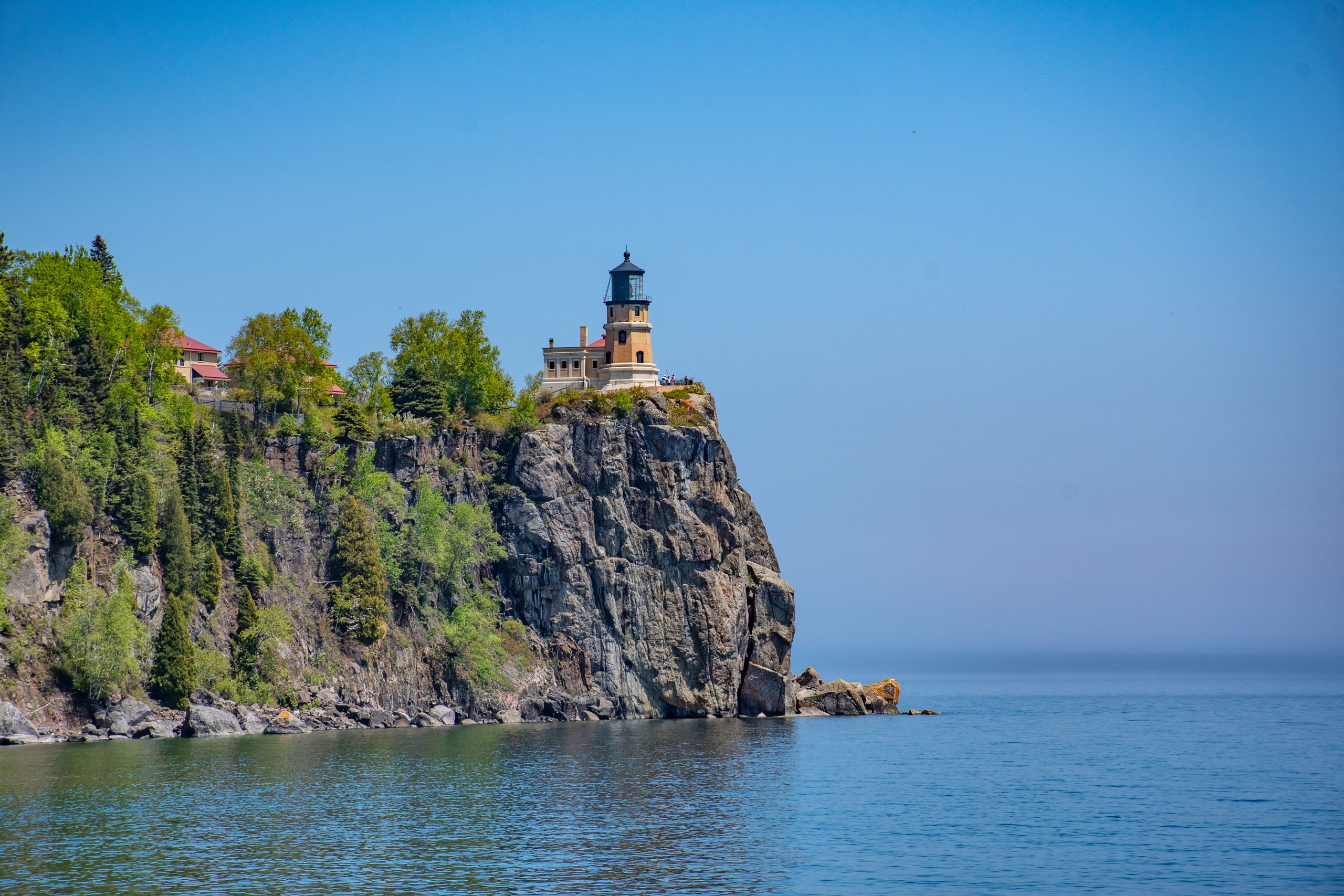
Perched on a 130-foot cliff of anorthosite rock above the cold blue waters of Lake Superior, Split Rock Lighthouse is arguably the most photographed landmark in Minnesota and one of the most iconic lighthouse images in the entire United States. Built in 1910 in response to a deadly November storm that wrecked 29 ships on Lake Superior in a single 24-hour period, the lighthouse served as an essential navigation aid until 1969 and now stands as a beautifully preserved historic site that draws visitors from across the country. A trip up the North Shore of Lake Superior without stopping at Split Rock simply isn’t complete.
The History Behind the Light
The November 1905 storm that prompted construction of Split Rock Lighthouse was one of the most devastating in Lake Superior’s long and violent meteorological history. The storm’s powerful winds and massive waves sank or damaged dozens of vessels, many of them heavily loaded iron ore carriers, causing enormous losses of life and cargo. The disaster revealed how poorly equipped the Lake Superior coastline was with navigational aids, particularly along the rugged North Shore between Duluth and the Canadian border.
The U.S. Lighthouse Service selected a site on a dramatic headland near what would eventually become the community of Two Harbors and began construction in 1909. The challenge was formidable: the cliff site was inaccessible by road, requiring all construction materials to be hauled up the cliff face by derrick from supply boats on the lake. The project was completed in 1910, and the lighthouse began operation that year. For nearly six decades, the light guided ships past the hazardous North Shore, until improved navigational technology rendered it obsolete and it was decommissioned in 1969. Minnesota’s Department of Natural Resources took over the site in 1971 and developed it into the state historic site it is today.
Touring the Lighthouse and Historic Site
The Split Rock Lighthouse State Historic Site is managed by the Minnesota Historical Society and offers guided tours of the lighthouse tower, the fog signal building, and the keeper’s dwelling. The lighthouse itself is a remarkably complete and authentic example of early 20th-century lighthouse architecture. The fog signal building houses the original machinery used to power the light, and interpreters explain the equipment and the keeper’s life in clear and engaging detail.
Climbing the lighthouse tower is one of the most memorable parts of the visit. The view from the lantern room, looking down the sheer cliff face to the churning lake below and out across the water to the horizon, provides an immediate and visceral sense of what the keepers experienced during the violent storms that made their work so critical. The lighthouse lens, a third-order Fresnel lens with hand-ground glass prisms, is still in the lighthouse and is lit ceremonially each year on November 10, the anniversary of the wreck of the Edmund Fitzgerald, the most famous ship to sink on Lake Superior.
The Edmund Fitzgerald Connection
The Edmund Fitzgerald, a massive iron ore carrier, sank in Lake Superior on November 10, 1975, in a severe storm, taking all 29 crew members with it. The ship has become the most famous Great Lakes shipwreck, immortalized by Gordon Lightfoot’s 1976 song The Wreck of the Edmund Fitzgerald. Though the ship sank well to the east of Split Rock, the annual lighting of the lighthouse on November 10 has become a commemoration of the Fitzgerald and all sailors lost on the lake. The ceremony draws hundreds of visitors each year and is a moving event that connects the lighthouse’s history of storm service to one of the Great Lakes’ most poignant tragedies.
The Park Trails and Lake Access
Split Rock Lighthouse State Park, which surrounds the historic site, has several miles of trails that make it possible to spend a full day in the area even after touring the lighthouse. The Trail Center near the lighthouse provides access to trails that wind along the lakeshore and through the boreal forest of birch, spruce, and balsam fir typical of the North Shore. The shoreline below the lighthouse cliff is accessible via a short but steep trail and provides the classic low-angle view looking up at the lighthouse perched dramatically above. This is the photograph that most people want, and the rocky shoreline provides good footing and multiple vantage points.
Day-use picnic areas and a small beach provide pleasant spots for lunch or a rest. The park has a campground as well, and camping under the stars within walking distance of the lighthouse is a genuinely special experience, particularly in late summer and fall when the weather is crisp and the lake is at its most vivid.
The North Shore Drive
Split Rock Lighthouse is located about 47 miles north of Duluth on Highway 61, Minnesota’s legendary North Shore Scenic Drive. The highway follows the Lake Superior shoreline for 150 miles between Duluth and the Canadian border at Grand Portage, passing through a continuous stretch of state parks, waterfalls, small towns, and spectacular lake scenery. Split Rock is best visited as part of a longer North Shore road trip that might also include Gooseberry Falls State Park, the town of Grand Marais, Temperance River State Park, and Tettegouche State Park, all of which are within an easy drive.
Split Rock Lighthouse earns its iconic status. The combination of dramatic cliff scenery, beautifully preserved historic buildings, informative and engaging interpretation, and the profound backdrop of Lake Superior creates a visitor experience that is hard to improve upon. It’s the kind of place that stays with you long after you’ve driven away down the shore, and the image of the lighthouse on its cliff has a way of appearing unbidden in your memory for years afterward.