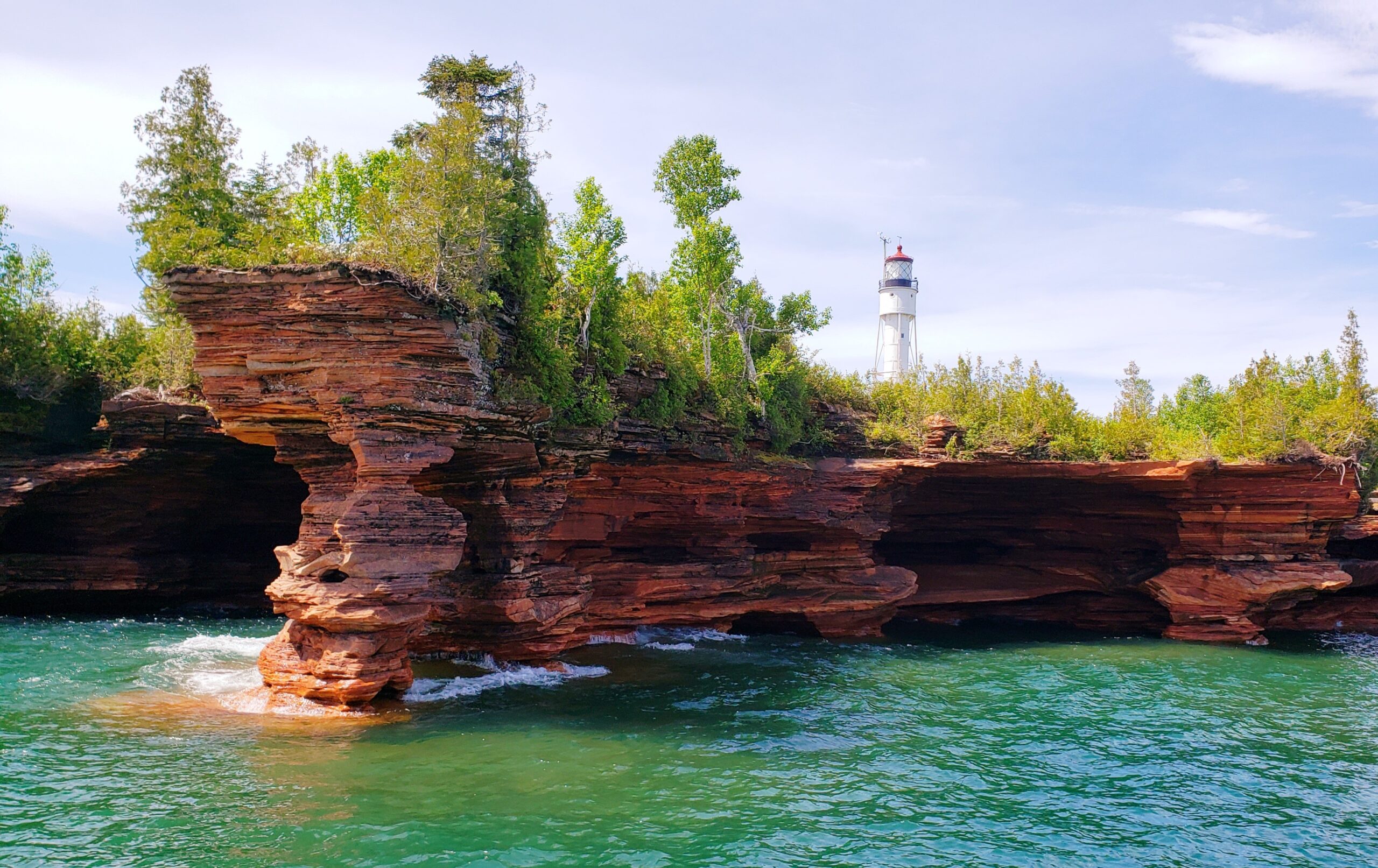
Off the tip of the Bayfield Peninsula in northern Wisconsin, scattered across the cold blue waters of Lake Superior, lie 21 islands of extraordinary beauty. The Apostle Islands National Lakeshore encompasses these islands and a 12-mile stretch of mainland shoreline, protecting a landscape of sea caves, sandstone cliffs, old-growth forest, historic lighthouses, and pristine beaches that is unlike anything else in the Great Lakes region. For kayakers, sailors, campers, and anyone who loves wild and remote places, the Apostle Islands represent one of the finest national park destinations in the entire country.
The Islands and Their Character
The 21 islands range in size from tiny, wooded outcroppings barely large enough to land a kayak on, to Stockton Island, the largest at about 10,000 acres, which has a campground, trails, and a beautiful lagoon. Each island has its own character: some are heavily forested with old-growth hemlock and northern hardwoods, some have sandy beaches and shallow warm bays, and others feature dramatic cliff shorelines and sea caves carved by centuries of wave action.
The sea caves are among the most spectacular features of the Apostle Islands. Found primarily along the mainland shoreline near Meyers Beach and on the northeastern faces of Sand Island and Devils Island, these caves were sculpted from the reddish-brown Orienta sandstone by the relentless action of Lake Superior waves. The cave walls are stained in rich swirls of red, orange, brown, and tan, and in some places the caves extend deep into the rock with multiple chambers and arched openings. Exploring them by kayak at water level, floating silently through the dim interior of a cave with the lake light reflecting on the stone ceiling above you, is one of the most memorable outdoor experiences the Midwest has to offer.
Winter Ice Caves
Perhaps the most astonishing thing about the Apostle Islands is what happens in deep winter. When Lake Superior freezes enough to support foot traffic, typically in January and February, the sea caves become accessible by walking across the ice directly from Meyers Beach on the mainland. The frozen spray and mist from the waves build up on the cave entrances and interior surfaces over weeks and months, creating extraordinary formations of icicles, ice columns, frozen curtains, and glittering ice-encrusted walls that glow blue, green, and white in the winter light. When the ice caves are accessible, word travels fast, and thousands of visitors make the trek across the frozen lake to witness the spectacle. It doesn’t happen every year due to variable ice conditions, but when it does, it is one of the most magical natural experiences in the Great Lakes.
Kayaking and Sailing
Sea kayaking is the primary way most visitors experience the Apostle Islands up close. The paddling distances between islands are substantial and the lake can be rough even in summer, so kayaking experience and proper equipment are important. Several outfitters based in Bayfield offer rentals, guided day trips, and multi-day guided camping expeditions. For first-time visitors to the islands, a guided trip is strongly recommended, as guides can navigate the best caves and shorelines while managing safety on unpredictable Lake Superior.
Sailing is another wonderful way to experience the islands. Several charter sailboat operations work out of Bayfield, offering day cruises and overnight trips that cover multiple islands. Apostle Islands Cruise Service offers narrated boat tours that don’t require any kayaking skill, making the island landscapes accessible to visitors of all abilities.
Lighthouses
The Apostle Islands contain the largest collection of lighthouses in the national park system, with six historic lights scattered across the archipelago. These lighthouses, built between 1857 and 1891, guided commercial shipping on Lake Superior during the era of Great Lakes maritime commerce. Several are accessible by boat and offer tours during the summer season. The Raspberry Island Lighthouse has been restored to its 1930s appearance and offers tours that include the keeper’s dwelling. Devils Island Lighthouse, at the northernmost point of the archipelago, is particularly dramatic, perched on a cliff above the most wave-exposed shoreline in the park.
The Town of Bayfield
Bayfield is the primary gateway to the Apostle Islands and is itself a thoroughly charming small town worth exploring. Perched on a hillside above the lake, it has a compact downtown with excellent restaurants, galleries, shops, and lodging ranging from classic inns to vacation rentals. The ferry to Madeline Island, the only inhabited Apostle Island and the only one not part of the national lakeshore, departs from Bayfield and is a worthwhile addition to any visit. Bayfield is also the center of Wisconsin’s apple and berry farming culture, and the roadside stands and pick-your-own farms in the surrounding countryside are a delight in late summer and fall.
Planning Your Trip
Bayfield is located about 75 miles east of Duluth, Minnesota on State Highway 13. The park visitor center is in Bayfield at 415 Washington Avenue and is an excellent starting point for trip planning. The park is open year-round, and the national park has no entrance fee, though some concessions and ferry services charge fees. Summer, from late June through August, is the peak season for kayaking and camping. Spring brings waterfalls and wildflowers to the forest interior. Fall foliage in October is spectacular against the blue backdrop of the lake. Winter, when conditions allow, offers the extraordinary ice cave experience.
The Apostle Islands National Lakeshore rewards the effort required to reach it with scenery and experiences that are genuinely world-class. Whether you come to paddle, to sail, to hike the island trails, or simply to stand on a sandstone cliff and watch Lake Superior stretch endlessly toward the horizon, this remarkable corner of Wisconsin will give you something to remember for a very long time.