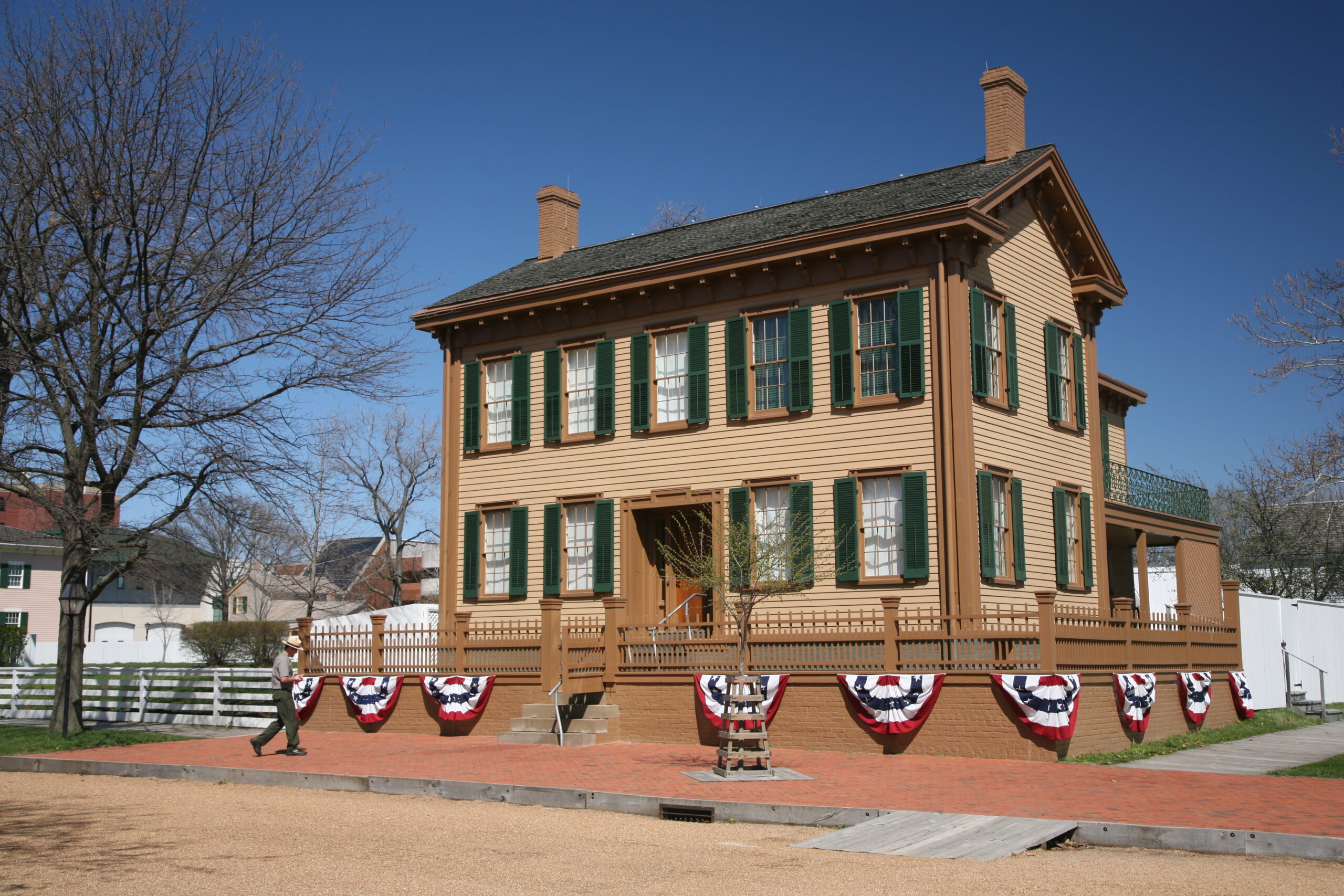
In a quiet neighborhood of 19th-century homes in the heart of Springfield, Illinois, the house where Abraham Lincoln lived for 17 years before becoming president of the United States stands preserved and interpreted for visitors as one of the most significant historic sites in America. The Lincoln Home National Historic Site encompasses not just the Lincoln family’s Greek Revival house but also an entire four-block neighborhood of period homes that recreates the environment Lincoln knew. Walking these brick sidewalks, looking up at the modest but dignified house, and stepping inside the rooms where Lincoln paced and thought and prepared for his extraordinary destiny creates a connection to history that few sites in the country can match.
The House Itself
Abraham and Mary Todd Lincoln purchased the house at 8th and Jackson Streets in 1844 for $1,500, and it remained their home until they left for Washington in February 1861 following Lincoln’s election as president. Lincoln lived there during his years as a successful Springfield lawyer and Illinois politician, during his debates with Stephen Douglas, and during the presidential campaign of 1860. He never returned after leaving for Washington. The house was donated to the State of Illinois and later transferred to the National Park Service, which has meticulously restored it to its 1860 appearance.
The interior of the house reflects the Lincolns’ status as a prosperous middle-class family. The parlors on the ground floor are furnished with period pieces including some original Lincoln family items, and the upstairs bedrooms give a tangible sense of the family’s daily life. Tours are led by National Park Service rangers who are knowledgeable and engaging, weaving together the story of the house with the larger story of Lincoln’s career and character. The tours are available in both ranger-led and self-guided formats, with ranger-led tours departing from the visitor center throughout the day.
The Historic Neighborhood
One of the most thoughtful aspects of the Lincoln Home National Historic Site is its preservation of the surrounding neighborhood. The Park Service has acquired and restored a four-block area of period homes around the Lincoln house, creating an immersive environment that conveys the feel of the neighborhood as Lincoln knew it. The Corneau and Sprigg houses, the Dean House, and other properties in the neighborhood are maintained in period condition and can be visited as part of the site experience. Walking the brick sidewalks past these homes, with the sounds of modern Springfield muffled, it’s easy to imagine the neighborhood as it appeared when Lincoln walked these same paths to his law office downtown.
Lincoln in Springfield
Springfield takes its Lincoln heritage seriously, and the Lincoln Home is just one of many sites connected to the 16th president available for exploration. The Abraham Lincoln Presidential Library and Museum, located a few blocks from the Lincoln Home, is a nationally significant institution with one of the most comprehensive Lincoln collections in the country. The museum portion uses state-of-the-art exhibits and immersive environments to tell Lincoln’s life story with a vividness that is surprising for a history museum. The theatrical special effects in some exhibits startled reviewers when the museum opened but have aged well and remain effective.
Lincoln’s Tomb State Historic Site in Oak Ridge Cemetery is another essential stop, containing the remains of Lincoln, Mary Todd Lincoln, and three of their four sons. The red granite monument is imposing and moving, and the interior burial chamber with Lincoln’s sarcophagus is a solemn and powerful space. Visitors traditionally rub the nose of the bronze Lincoln bust outside the entrance for good luck, a tradition that has polished it to a bright shine.
The Old State Capitol, where Lincoln served as a state legislator and gave his famous House Divided speech, is a handsome restored building in downtown Springfield with free guided tours. Lincoln’s law office, where he practiced with partner William Herndon, is preserved nearby. A day in Springfield can be completely filled with Lincoln-related sites without exhausting the possibilities.
The Rest of Springfield
Springfield is a genuinely pleasant mid-sized city with amenities beyond its Lincoln heritage. The Dana-Thomas House, a Frank Lloyd Wright Prairie Style masterpiece built in 1902, is one of the finest Wright houses open for tours and is worth a dedicated visit. The Illinois State Museum on the Capitol grounds has excellent natural history and cultural exhibits. The Capitol building itself is open for tours and is an impressive Gilded Age edifice. Route 66 begins in Springfield and the city has multiple sites connected to the Mother Road, including the Cozy Dog Drive-In, claimed to be the birthplace of the corn dog.
Getting There and Practical Information
Springfield is located in central Illinois at the intersection of Interstates 55 and 72, about 200 miles south of Chicago and 95 miles north of St. Louis. Amtrak’s Lincoln Service train connects Chicago and St. Louis with a stop in Springfield, making it accessible without a car. The Lincoln Home National Historic Site visitor center, where tours begin and tickets are distributed, is located at 426 South 7th Street. Admission to the Lincoln Home is free, though timed entry passes are required and can be picked up at the visitor center on the day of your visit. The site is open year-round, closed on Thanksgiving, Christmas, and New Year’s Day.
The Lincoln Home National Historic Site is one of those places where history doesn’t feel distant or academic but immediate and human. Standing in the rooms where Lincoln lived with his family, reading his letters, and following his story from Springfield lawyer to wartime president creates an experience of genuine emotional resonance. It belongs on every American’s list of sites to visit at least once in a lifetime.