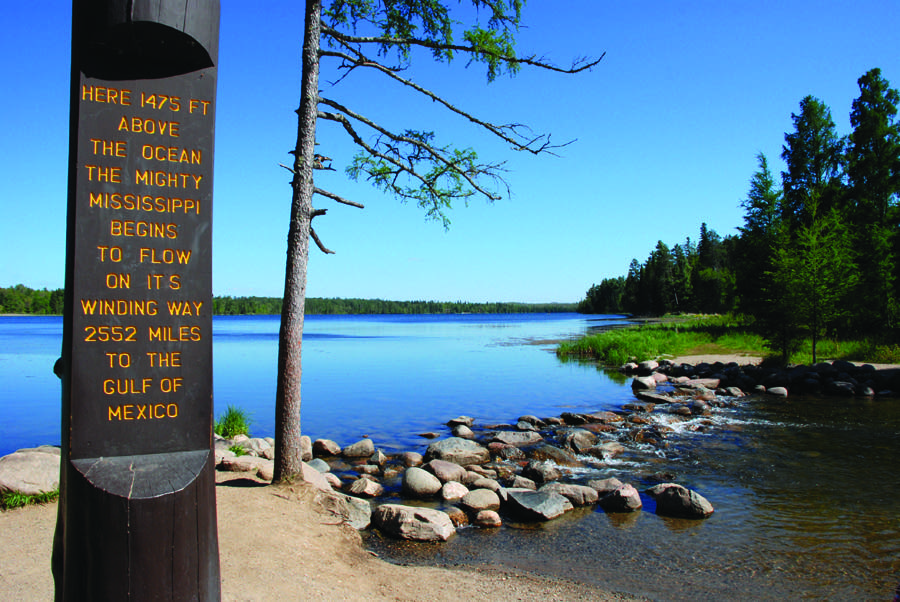
In the lake-studded forests of northwestern Minnesota, a modest stream trickles out of a shallow, clear lake over a jumble of smooth rocks and begins one of the most famous journeys in North American geography. The headwaters of the Mississippi River, the source of the continent’s mightiest river system, are located in Itasca State Park, Minnesota’s oldest state park and one of its most magnificent. Visitors come from around the world to wade across the Mississippi at its starting point, and the park that surrounds this singular attraction is extraordinary in its own right, featuring old-growth forest, more than 100 lakes, excellent wildlife viewing, and miles of trails and roads through some of the finest north-woods scenery in the state.
The Headwaters of the Mississippi
The headwaters experience at Lake Itasca is wonderfully understated given the river’s global fame. A short path leads from the parking area to the outlet of Lake Itasca, where the Mississippi River begins its 2,340-mile journey to the Gulf of Mexico. The river at this point is perhaps 10 feet wide and only knee-deep, running clear and cold over a natural stepping-stone crossing that visitors have been wading across for generations. There is something genuinely moving about stepping across the Mississippi at its very start, knowing that the same water will eventually pass New Orleans, and the experience never loses its power regardless of how many times you do it.
The surrounding area is well-developed for visitor comfort, with interpretive signs, a nearby visitor center, picnic tables, and good parking. The nearby Lake Itasca Nature Store and the Mary Gibbs Mississippi Headwaters Center offer exhibits on the river’s ecology, geology, and cultural significance. The headwaters area can be crowded in midsummer, especially on weekends, but the experience is worthwhile at any time.
The Old-Growth Forest
Perhaps the greatest treasure of Itasca State Park beyond the headwaters is its surviving stand of old-growth forest. Minnesota was extensively logged in the late 19th and early 20th centuries, and old-growth forest is rare in the state. Itasca contains one of the largest and finest remnants, with towering red and white pines reaching heights of 120 feet and ages exceeding 250 years. The Wilderness Drive, a 10-mile one-way road through the heart of the park, passes through sections of this ancient forest and provides one of the most impressive drives in the Minnesota state park system. Walking among these immense trees on the nearby forest trails gives a sense of what northern Minnesota looked like before the logging era.
The Preacher’s Grove, a stand of particularly old and impressive pines near the headwaters area, is named for the religious reflections that the grove supposedly inspired in early visitors. Walking among these trees, looking up at their massive trunks and the dappled light filtering through canopy far overhead, is a genuinely meditative experience. Naturalists and photographers find the old-growth sections of the park endlessly rewarding.
Wildlife Viewing
Itasca State Park is one of the best places in Minnesota for wildlife viewing. The park’s mix of forest, wetland, and lakeshore habitats supports a diverse array of animals. White-tailed deer are abundant and frequently seen along roadsides, especially in the early morning and evening. Black bears are present in the park and occasionally seen, particularly near berry patches in late summer and fall. Wolves have been known to roam through the park, though sightings are uncommon. Bald eagles nest in the park and are regularly seen along the lakeshore. The birding is outstanding throughout, with a particular concentration of boreal species including black-backed woodpeckers, Canada jays, and common loons on the lakes.
Cycling, Hiking, and Water Recreation
Itasca has extensive trails for hiking and cycling, with the paved Wilderness Drive doubling as a popular cycling route. The park has rental bikes available at the Douglas Lodge area, and cycling the Wilderness Drive is one of the classic Itasca experiences. Hiking trails range from short nature loops to longer routes through the forest interior. The Dr. Roberts Nature Trail and the Schoolcraft Trail near the headwaters are popular options that combine good scenery with historical interpretation.
Water recreation on Lake Itasca and the park’s many smaller lakes is excellent. Canoe and kayak rentals are available at the Douglas Lodge pier, and the interconnected lake system allows extended paddling. The swimming beach near the main boat launch is pleasant in summer. Fishing for walleye, northern pike, and panfish is permitted with a Minnesota fishing license.
Getting There and Lodging
Itasca State Park is located about 20 miles north of Park Rapids, Minnesota, on U.S. Highway 71. It’s about a 3-hour drive north of Minneapolis. The Douglas Lodge, a beautiful old log and stone lodge built by the CCC in the 1930s, offers rooms and cabins inside the park, making it possible to stay right in the midst of the old-growth forest. Camping is available at three campgrounds within the park, ranging from electric sites to more primitive camping. The park charges a vehicle permit fee for entry.
Itasca State Park is one of Minnesota’s most genuinely satisfying destinations. The headwaters experience alone would justify the drive, but the old-growth forest, the wildlife, the lakes, and the trails make it one of those rare parks where you could spend a week and still feel there was more to explore. Come for the Mississippi and stay for everything else it has to offer.