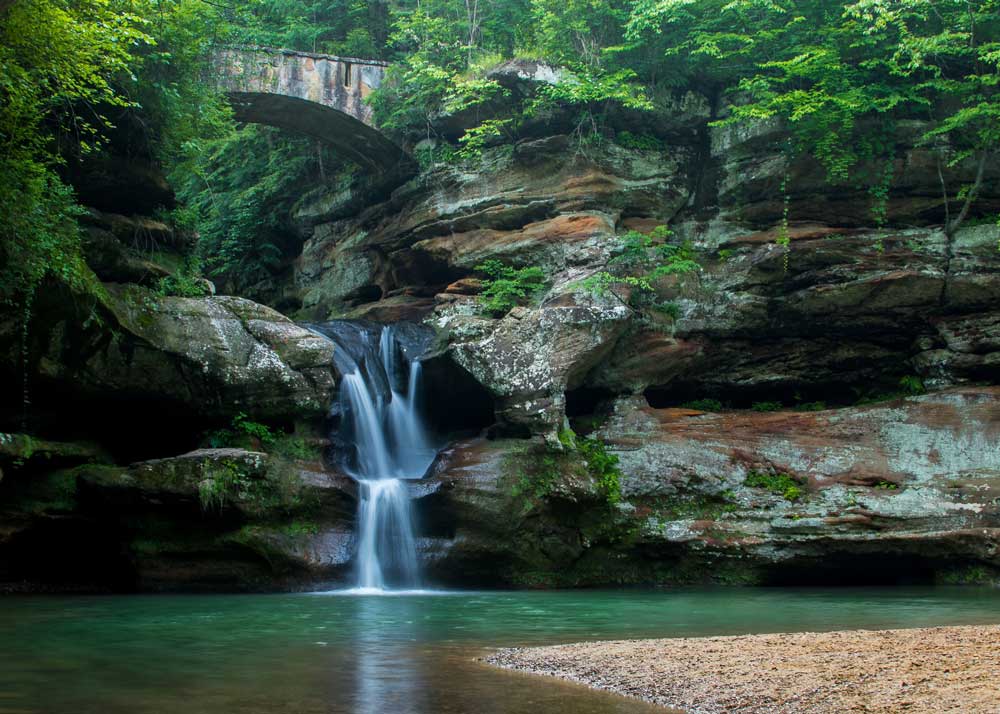
In the unglaciated hill country of southeastern Ohio, where the ancient Blackhand sandstone has been carved by millions of years of water and frost into a landscape of caves, cliffs, gorges, and waterfalls, Hocking Hills State Park stands as one of the most beloved natural areas in the entire state. The park’s collection of geological formations is extraordinary by any measure: towering recess caves with overhanging ceilings, plunging waterfalls that drop into mist-filled gorges, and narrow ravines lined with hemlocks and ferns that create an atmosphere more reminiscent of the Appalachian mountains than the Midwest. For outdoor enthusiasts based in Ohio or visiting the region, Hocking Hills is essential.
Old Man’s Cave
Old Man’s Cave is the most iconic and most visited area within Hocking Hills State Park, and for good reason. The site takes its name from a hermit named Richard Roe who reportedly lived in the large recess cave here in the early 19th century. The cave itself is a dramatic overhang of Blackhand sandstone forming a semicircular alcove roughly 200 feet wide and 75 feet deep, sheltering a series of waterfalls, pools, and stream-cut gorges that cascade through the formation. Trails wind through the cave area at multiple levels, passing through narrow passages called Devil’s Bathtub, crossing log bridges, and climbing stone staircases carved into the rock.
The Lower Gorge below Old Man’s Cave extends downstream through a deep, hemlock-shadowed ravine to Ash Cave, the park’s other premier formation, accessible via a 6-mile round-trip trail. The gorge trail is one of the finest hikes in Ohio, passing through continuously beautiful scenery with the stream gurgling alongside and the sandstone walls rising overhead. The combination of Old Man’s Cave and the gorge trail to Ash Cave is the classic Hocking Hills hiking experience.
Ash Cave
Ash Cave is the largest recess cave in Ohio and one of the largest in the eastern United States. The cave is a massive horseshoe-shaped overhang about 700 feet wide and up to 90 feet deep, formed by differential erosion of the soft lower layers of the sandstone formation. A beautiful waterfall drops from the lip of the cave in a thin, vertical stream that in wet seasons fans out into a wide curtain of water before landing in the shallow pool at the cave floor. The cave interior is large enough to hold hundreds of people comfortably under its roof, and the sense of sheltered enclosure it provides is deeply appealing.
The short trail to Ash Cave from the main parking area is paved and mostly flat, making it one of the most accessible natural attractions in the park. The short walk can be done in 20 minutes, though most visitors linger much longer. Ash Cave is particularly magical in winter when the waterfall freezes into a dramatic ice column and the surrounding forest is snow-covered.
Cedar Falls
Somewhat off the main tourist path but worth seeking out, Cedar Falls is considered by many visitors to be the most beautiful waterfall in Hocking Hills. The falls drop about 50 feet over a curved ledge of sandstone into a deeply sculpted plunge pool, and the surrounding forest of hemlocks gives the area a dark, cool, primeval atmosphere even in midsummer. The trail from the Cedar Falls parking area is about 1.5 miles round trip and travels through some of the park’s most scenic ravine terrain.
Conkle’s Hollow
Conkle’s Hollow State Nature Preserve, adjacent to the main state park, is a spectacular narrow gorge with 200-foot sandstone walls rising on either side. Two trails explore the hollow: the gorge trail stays at the bottom of the canyon and is a flat, easy walk through a dramatically enclosed landscape of moss-covered walls and filtered light. The rim trail, by contrast, follows the top of the canyon walls for panoramic views over the forest and the hollow below. The combination of both trails into a single loop is highly recommended.
Rock House
Rock House is the only true cave in the Hocking Hills park complex, in the strict geological sense of a tunnel formed within the rock rather than an overhang. The cave is about 200 feet long and 25 feet high, formed along a horizontal fault line in the cliff face. Seven large windows, or openings in the cave wall, provide views out over the forested landscape below and let light into the cave interior. The effect of standing inside Rock House and looking out through the arched openings is memorable and unique within the park.
Camping, Lodging, and the Surrounding Area
The Hocking Hills region has a thriving tourism economy built around the park, with an enormous variety of lodging options including the Hocking Hills State Park campground, a nearby state park lodge, and hundreds of private cabin rentals scattered throughout the surrounding hills. The cabin rental industry is particularly well-developed here, and many visitors prefer renting a private cabin in the woods to staying at a conventional hotel. Zip-line canopy tours, kayaking on the Hocking River, horseback riding, and various other outdoor activities are available through private outfitters in the area.
Getting There
Hocking Hills State Park is located in Logan, Ohio, about 55 miles southeast of Columbus on State Route 664 and U.S. Route 33. The drive from Columbus takes about an hour. From the main Old Man’s Cave area, the other park features are all within a few miles. Parking at the Old Man’s Cave and Ash Cave areas can be challenging on peak weekends; arriving before 9 a.m. or after 3 p.m. helps considerably. The park has no entrance fee.
Hocking Hills State Park is the kind of place that makes a strong claim on visitors’ affections almost immediately. The scenery is genuinely dramatic, the trails are accessible, and the park manages the tricky balance of being both popular and beautiful. It’s one of Ohio’s finest natural destinations and one of the Midwest’s most overlooked gems. If you haven’t been, go soon, and expect to start planning your return trip while you’re still there.