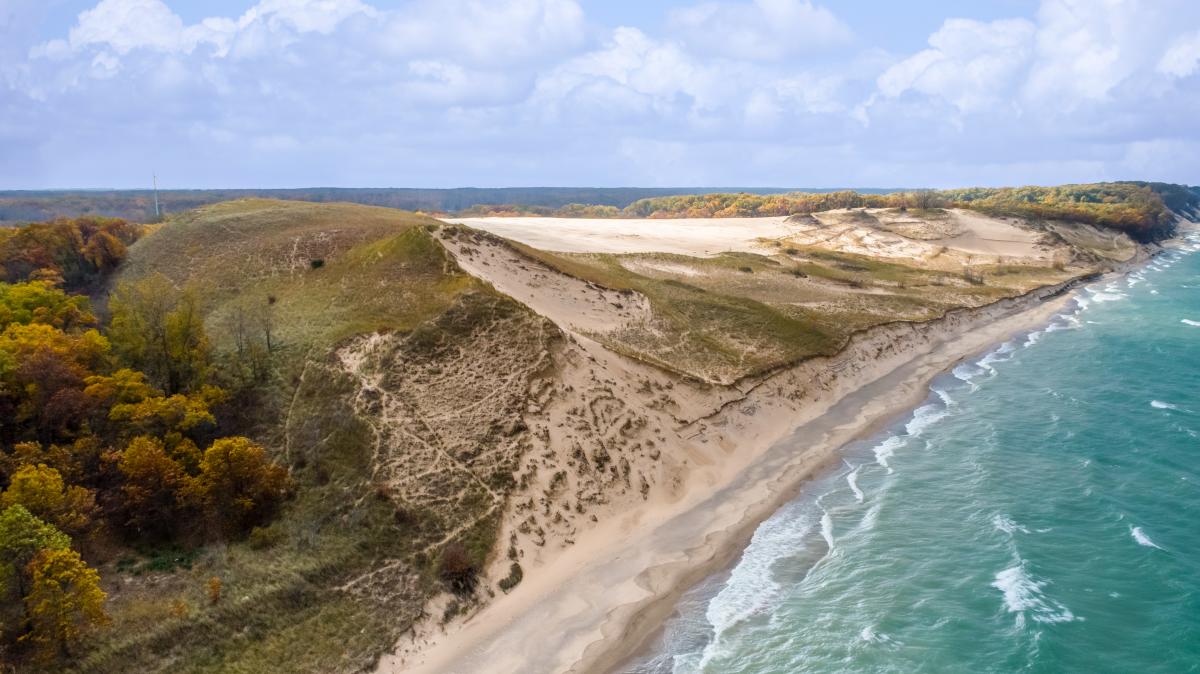
Not far from the skyscrapers of Chicago, where the southern shore of Lake Michigan curves gently into Indiana, you’ll find one of the most unexpectedly diverse national parks in the country. Indiana Dunes National Park may not have the dramatic scale of Yellowstone or the towering walls of Yosemite, but what it lacks in size it more than makes up for in ecological richness, scenic variety, and easy accessibility. For anyone living in or visiting the Chicago metro area, this park is one of the finest day trips available, and it rewards multiple visits across different seasons.
The Dunes Themselves
The sand dunes that give the park its name are the defining feature of the landscape. Formed over thousands of years by wind and wave action on Lake Michigan, the dunes range from gently sloping mounds covered in beach grass to towering, steep-sided mountains of sand reaching heights of over 125 feet. The three tallest dunes in the park, Mount Baldy, Mount Tom, and Mount Jackson, are landmarks in their own right. Mount Baldy, the largest and most active dune, is a so-called living dune that moves slowly inland over time, swallowing trees and structures in its path. Access to Mount Baldy is restricted except on ranger-led tours, which are offered regularly and give fascinating insight into the dune’s geology and ecology.
The beaches along the park’s lakeshore are excellent for swimming, sunbathing, and long walks. West Beach is the most developed beach area, with parking, restrooms, and picnic facilities. Dunbar Beach and Central Beach are quieter alternatives. The water of Lake Michigan is cold even in midsummer but is refreshingly clear and beautifully blue on sunny days. Sunsets over the lake from the Indiana shoreline are spectacular, with the Chicago skyline visible in the distance to the northwest.
Remarkable Biodiversity
What surprises most first-time visitors to Indiana Dunes is how many different habitats are packed into such a relatively small area. Within the park’s roughly 15,000 acres, you’ll find lakefront beach, active sand dunes, stabilized dunes covered in oak savanna, freshwater marshes, bogs, tallgrass prairies, and dense hardwood forests. This patchwork of environments supports an extraordinary range of plant and animal life.
The park is famous among botanists and ecologists as the birthplace of the concept of plant succession, the process by which plant communities change over time. Early 20th-century scientist Henry Cowles conducted landmark ecological research here, studying how plants colonize bare sand and gradually build richer soils that support increasingly complex ecosystems. The park’s landscape is a living textbook of this process, and you can witness it directly by walking from the open beach back through the dunes and into the forest.
Bird watching is outstanding throughout the park, particularly during spring and fall migration. Indiana Dunes sits along a major migratory corridor, and birders come from across the Midwest to see warblers, shorebirds, waterfowl, and raptors. The park has recorded over 350 bird species, one of the highest totals of any national park in the country. The Portage Lakefront and Riverwalk area is a particularly productive spot during migration.
Hiking Trails
The park has more than 50 miles of trails ranging from easy lakeside strolls to strenuous dune climbs. The Dune Succession Trail is a popular one-mile loop that illustrates the succession concept beautifully, moving through distinct plant communities as you walk inland from the lake. The three-mile Cowles Bog Trail winds through one of the park’s most ecologically significant areas, a National Natural Landmark featuring a floating sphagnum bog surrounded by ancient black oak forest.
For a more challenging hike, the Trail 9 and Trail 10 combination in the eastern section of the park offers dune climbs and forest walking with excellent views over the lakeshore. The Ly-co-ki-we Trail network in the central portion of the park is a good option for families, with well-marked paths through varied terrain. Horseback riding is permitted on designated trails as well, and the park has a horse staging area for visitors who bring their own animals.
Indiana Dunes State Park
Adjacent to the national park, Indiana Dunes State Park is a separately managed state facility that predates the national park and remains extremely popular. The state park includes some of the most dramatic dune scenery in the region and has excellent beach access, campgrounds, and additional hiking trails. The iconic 3-Dune Challenge, a strenuous route that climbs all three of the state park’s highest dunes in succession, is a beloved tradition among local outdoor enthusiasts. Many visitors combine a day at the national park with a stop at the state park for a comprehensive dunes experience.
Getting There and Planning Your Visit
Indiana Dunes National Park is located along the Lake Michigan shoreline in Porter and LaPorte counties, roughly 50 miles southeast of downtown Chicago. The park is easily accessible by car via Interstate 94 or U.S. Highway 12. Remarkably, the park is also reachable by train: the South Shore Line commuter railroad connects downtown Chicago to the Dune Park and Beverly Shores stations, both of which provide access to park trails and beaches. This makes it one of the very few national parks in the country accessible by public transit from a major city.
The Dorothy Buell Memorial Visitor Center, located just off Highway 49 near the town of Porter, is a good first stop for maps, ranger advice, and exhibits on the park’s ecology and history. Admission to the national park is free. The state park charges a vehicle entry fee. Summer weekends can be very busy, particularly at the main beach areas, so arriving early or visiting on a weekday is advisable during peak season.
Indiana Dunes National Park is a genuine hidden gem, the kind of place that locals cherish and out-of-state visitors are consistently surprised to discover. Whether you’re drawn by the beaches, the hiking, the birding, or simply the novelty of finding wild sand dunes an hour from a major city, this park delivers a wonderful experience. Add it to your Midwest itinerary and give yourself a full day to explore.