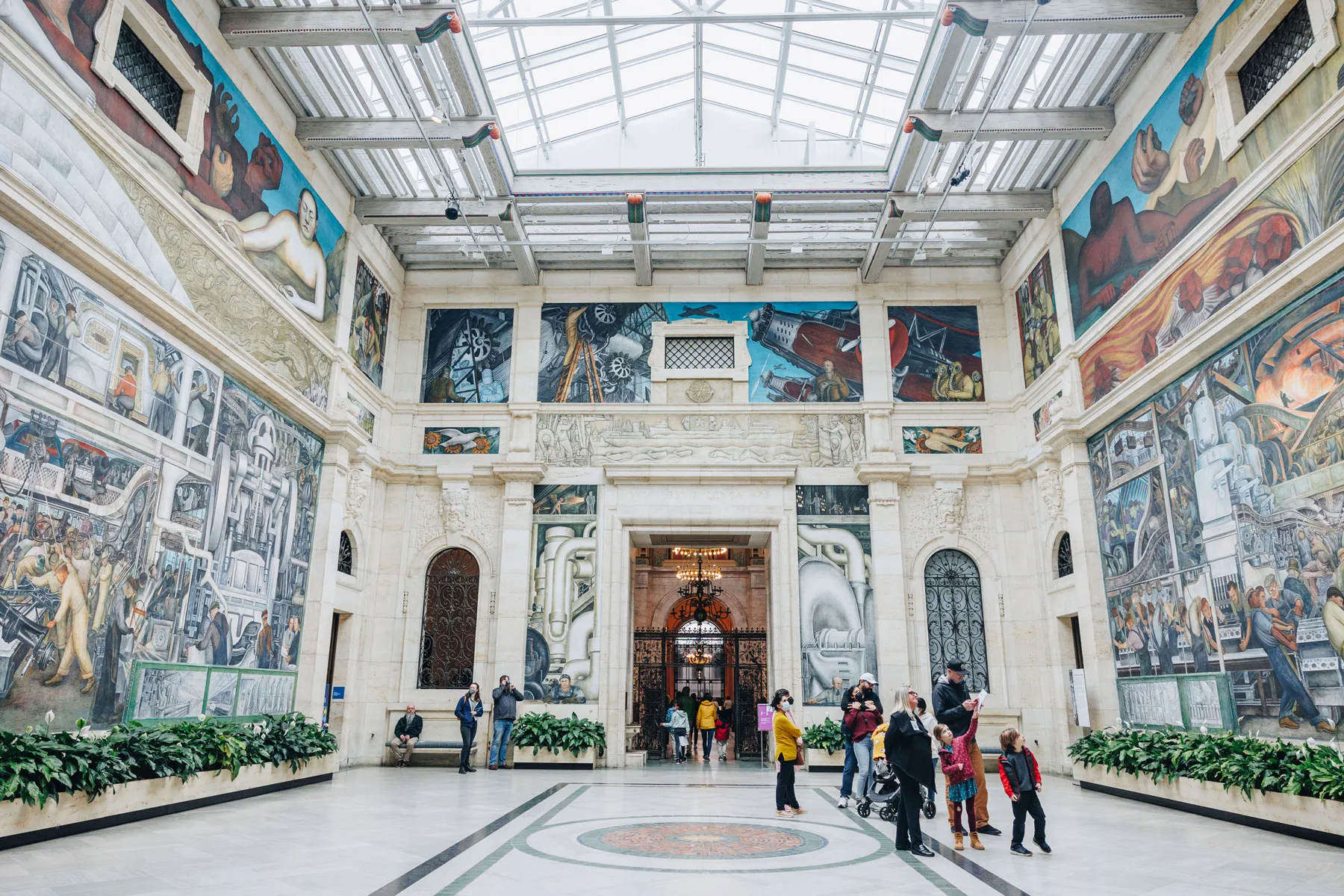
The Detroit Institute of Arts in Detroit, Michigan is one of the finest art museums in the United States and holds a collection so deep and so broad that it would be the pride of any city in the world. Yet it remains underappreciated outside Michigan, overshadowed perhaps by the city’s complicated reputation and the dramatic story of its fiscal difficulties in the early 21st century. For visitors willing to look past the preconceptions and make the trip to the museum’s Cass Corridor neighborhood, the DIA delivers an experience that ranks with the great art museums of the country, at a fraction of the crowd and cost that comparable institutions in New York or Chicago command.
The Collection
The DIA’s collection spans more than 65,000 works of art covering virtually every period, culture, and medium of human artistic production. The European paintings collection is outstanding, with major works by Rembrandt, Caravaggio, Bruegel, Van Eyck, and a long roster of other Old Masters. The American art collection is equally strong, tracing the full history of American painting and sculpture from colonial portraiture through the Hudson River School to the 20th century. The impressionist and post-impressionist holdings include important works by Monet, Cezanne, Degas, and Van Gogh. The African art and ancient Near Eastern collections are among the finest in the country.
The German Expressionist collection deserves particular mention: the DIA holds one of the finest collections of German Expressionist painting in the world, including major works by Ernst Ludwig Kirchner, Erich Heckel, and other key figures of the movement. For visitors with an interest in early 20th-century art, this collection alone justifies the trip to Detroit.
Diego Rivera’s Detroit Industry Murals
The DIA’s most celebrated single work is not a painting on canvas but a mural cycle that covers all four walls of the Garden Court at the museum’s center. The Detroit Industry Murals, painted by Mexican artist Diego Rivera between 1932 and 1933, depict the workers and machinery of the Ford River Rouge Complex, then the world’s largest industrial facility, in a monumental composition of extraordinary ambition and beauty. Rivera spent months at the Rouge plant observing and sketching before executing the 27-panel fresco, and the result is a work that is simultaneously a portrait of industrial America at its height, a socialist statement about the dignity of labor, and a dazzling technical achievement in the demanding fresco medium.
Standing in the Garden Court surrounded by Rivera’s murals is one of the great art experiences in the Midwest. The scale of the work, the density of detail, and the visual complexity of the composition reward extended looking. Rivera packed the walls with workers of all races, nationalities, and occupations, creating an image of America as a diverse, productive, and fundamentally human enterprise. The murals caused controversy when unveiled because of their socialist content and their celebration of industrial workers, but today they are universally recognized as masterpieces of 20th-century American art.
Special Exhibitions and Programs
The DIA hosts a rotating program of special exhibitions that regularly bring major loan shows to Detroit. The quality of the programming has remained high through the museum’s various financial challenges, and shows in recent years have covered everything from major retrospectives of celebrated artists to focused explorations of specific periods and themes. The museum’s education programs, film series, and public events make it a year-round cultural center for the Detroit region, and the Friday night programming, known as Friday Night Live, transforms the museum into a social venue with music, food, and a party atmosphere that draws a younger crowd to the galleries.
Getting There and Practical Details
The DIA is located at 5200 Woodward Avenue in Detroit’s Midtown neighborhood, adjacent to Wayne State University and the Detroit Medical Center. It’s a short drive or ride from downtown Detroit, and the QLine streetcar on Woodward Avenue connects the downtown core to the museum neighborhood. Admission is charged for adults, with free entry for residents of the three-county metro Detroit area. The museum is open Wednesday through Sunday, closed Monday and Tuesday. A restaurant and cafe in the museum provide good dining options during your visit.
The Detroit Institute of Arts is one of Michigan’s greatest cultural treasures, and the city of Detroit is better and more interesting than its reputation often suggests. Come for the Rivera murals, stay for the entire collection, and leave with a revised impression of both the museum and the city that surrounds it. Detroit rewards the curious visitor generously.