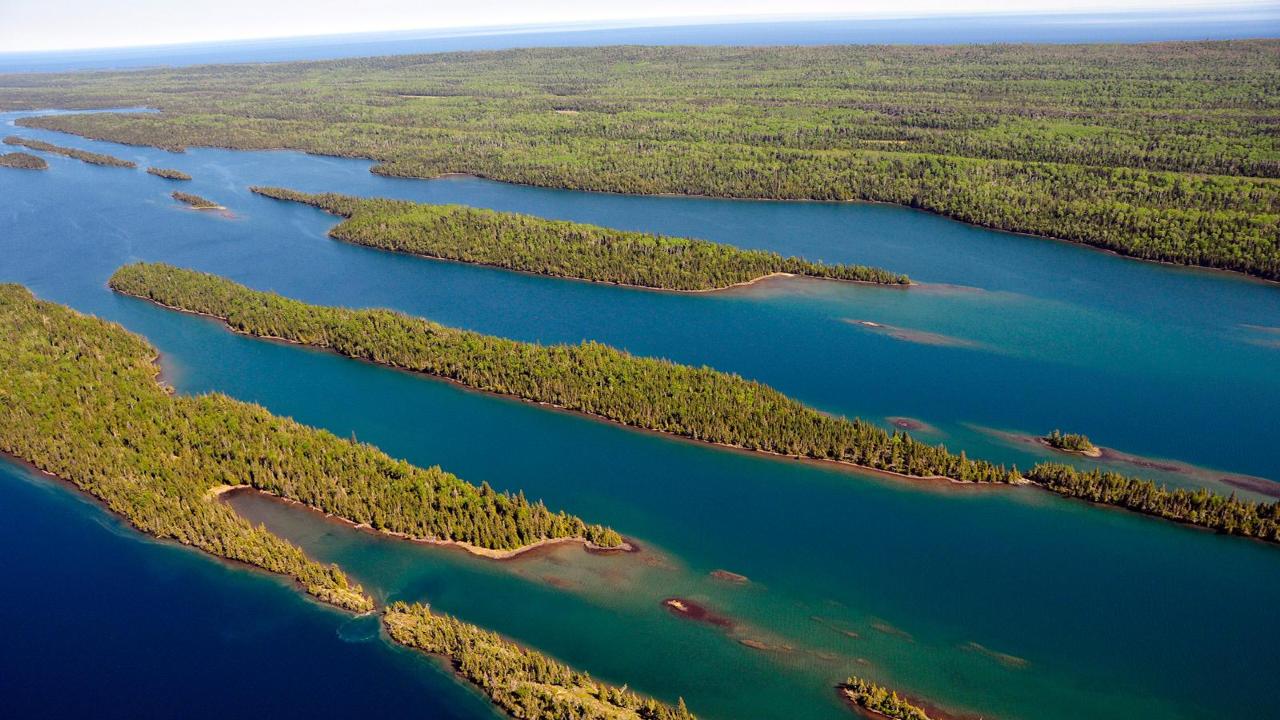
Floating in the remote northwestern waters of Lake Superior, closer to Minnesota and Canada than to Michigan’s Upper Peninsula, Isle Royale National Park is one of the most isolated and least visited national parks in the country, and that isolation is precisely what makes it extraordinary. The island, about 45 miles long and 9 miles wide, is a wilderness of boreal forest, rocky ridgelines, interior lakes, and craggy shoreline that has no roads and no permanent human inhabitants. Getting there requires a long boat ride or a floatplane. Once you arrive, you’re in a world defined entirely by hiking, paddling, fishing, and the remarkable ecosystem that results when a landscape is protected from direct human disturbance for generations. Isle Royale is not for everyone, but for those who seek it out, it is unforgettable.
Getting to the Island
There are several ways to reach Isle Royale, and choosing among them is one of the first planning decisions visitors make. Ferry service is available from Houghton, Michigan, which is the longest crossing at about 73 miles and takes approximately 6 hours on the MV Sandy; from Copper Harbor, Michigan, which takes about 3 hours on the Isle Royale Queen IV; and from Grand Portage, Minnesota, the shortest crossing at about 22 miles, which takes roughly 1.5 hours on the Voyageur II or the faster Seaspray. Floatplane service from Houghton provides the quickest access but also the most expensive. The choice of ferry port often depends on where you’re coming from, with the Minnesota crossing being most convenient for visitors from the Twin Cities and the Upper Peninsula crossings serving those coming from Michigan.
The park is open from mid-April through October, and the season is relatively short due to the harsh Lake Superior weather that makes late fall and winter untenable. Reservations for both ferry services and campgrounds within the park are essential and fill early for the peak summer months.
Hiking the Greenstone Ridge Trail
Isle Royale has about 165 miles of hiking trails, and the Greenstone Ridge Trail runs the length of the island along its central spine, covering approximately 40 miles from Windigo in the southwest to Rock Harbor in the northeast. Hiking the full Greenstone Ridge is the classic Isle Royale backpacking experience, typically completed in 4 to 6 days depending on pace and side trips. The ridge trail offers panoramic views over the island’s forest and the surrounding expanse of Lake Superior, passing through spruce-fir forest and over open rocky ridges that provide excellent wildlife viewing opportunities.
Moose and wolves are the island’s most celebrated residents, participants in one of the world’s longest-running predator-prey studies. Moose were the first large mammals to colonize Isle Royale after the glaciers retreated and have been hunted by wolves since a pack crossed the frozen lake in 1949. The interaction between the two populations has been studied continuously since 1958, making Isle Royale home to the longest continuous predator-prey study in the world. Moose sightings are common for hikers, as the animals are relatively undisturbed by human presence. Wolf sightings are rarer but always memorable.
Kayaking and Canoeing
The island’s extensive shoreline, inland lakes, and connecting portages make it outstanding territory for sea kayakers and canoeists. The interior lake chain running roughly parallel to the Greenstone Ridge provides a multi-day paddling route with portages ranging from a few hundred feet to nearly a mile. Sea kayaking along the island’s rugged outer shoreline, with its sea caves, secluded coves, and rock formations, is for experienced paddlers only, as Lake Superior’s weather can change rapidly and the water is dangerously cold. Canoe and kayak rentals are available at Rock Harbor and Windigo.
Fishing and Diving
Isle Royale’s waters are excellent for fishing, with lake trout, northern pike, walleye, and yellow perch all available. The island’s remote setting means fishing pressure is light, and catches of significant size are common for those willing to make the journey. Scuba diving around the island reveals several significant shipwrecks dating to the steamship era of Great Lakes navigation, preserved in excellent condition by the cold, clear water of Lake Superior. The wreck of the America, sunk in 1928, and the Congdon, sunk in 1918, are among the most popular dive sites and draw wreck diving enthusiasts from across the region.
Rock Harbor and Windigo
Isle Royale has two main visitor centers and developed areas. Rock Harbor at the northeastern end of the island is the larger, with the Rock Harbor Lodge (the park’s only lodging option with indoor accommodations), a restaurant, a small store, rental equipment, and access to the main trail network. Windigo at the southwestern end is smaller and more remote in character, with a visitor center, campground, and canoe and kayak rentals. Most visitors enter through one end and exit through the other, connecting via the Greenstone Ridge or a combination of trails and water routes.
Planning Your Trip
Isle Royale requires significantly more advance planning than most national parks. Ferry reservations should be made months in advance, particularly for summer weekends. Backcountry camping permits are required and are available first-come, first-served upon arrival at the park. The National Park Service website has detailed trip planning resources, and the Isle Royale Natural History Association is an excellent additional resource. The park has no cell service and very limited satellite connectivity, making it a true digital detox destination.
Isle Royale is not the right destination for every traveler, but for those who are prepared for its demands and drawn to genuine wilderness, it offers something rare in the modern world: a place where the noise stops completely, where the natural world operates on its own terms, and where a hiker or paddler can spend days without encountering pavement, automobile, or the general clutter of contemporary life. It is, in the fullest sense, a wilderness, and it is one of the finest places Michigan has to offer.