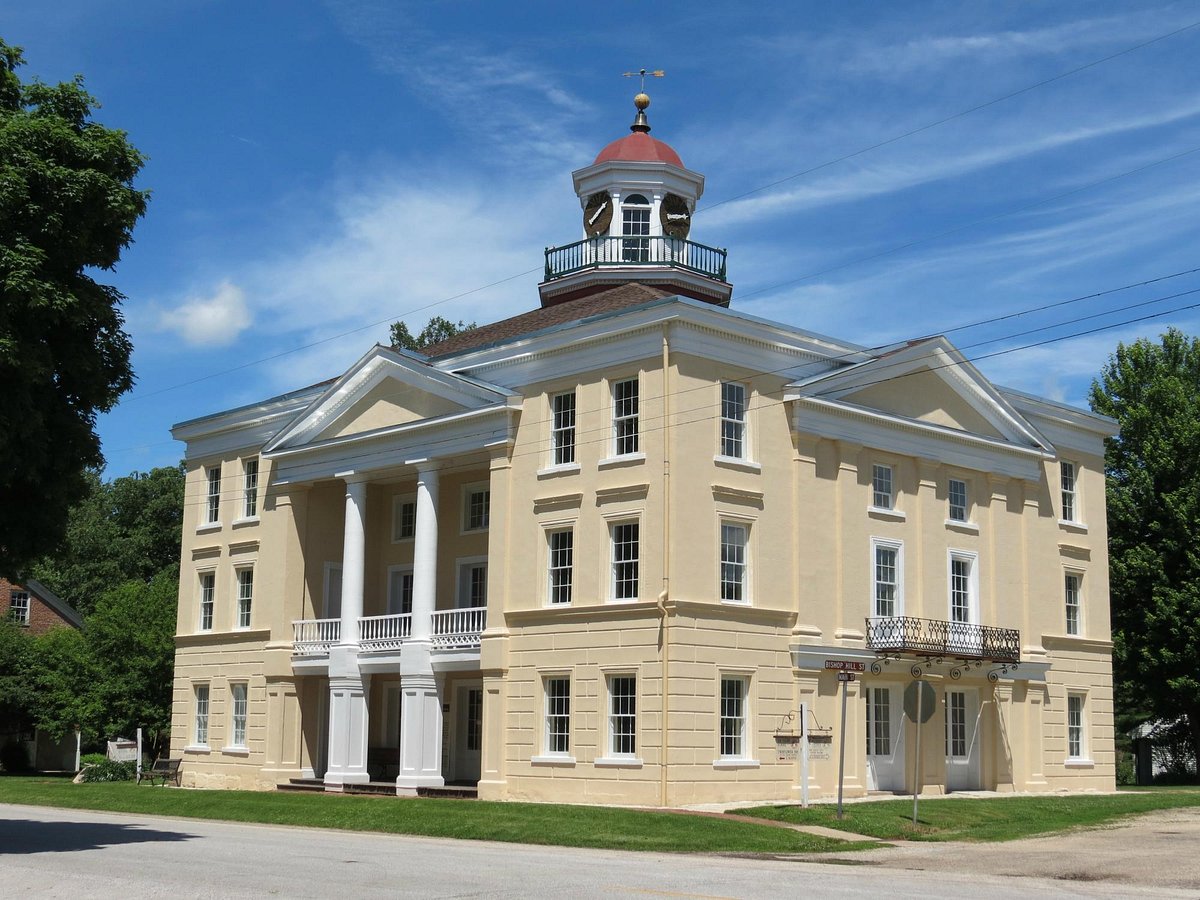
Bishop Hill, Illinois, a tiny village in Henry County about 150 miles southwest of Chicago, is one of the most unusual and historically significant communities in the state. Founded in 1846 by a group of Swedish religious dissenters who fled persecution in their homeland and crossed the Atlantic to build a utopian communal society on the Illinois prairie, Bishop Hill survived hardship, internal conflict, and the death of its charismatic founder to leave behind a remarkable collection of original buildings that today make it one of the finest intact examples of a 19th-century communal settlement in the United States. It is a genuinely extraordinary place, and almost nobody outside Illinois knows it exists.
The Story of the Bishop Hill Colony
The colony was founded by Erik Jansson, a Swedish preacher who had broken with the Swedish Lutheran Church over his belief that the church had strayed from true Christian principles. Jansson attracted a large following among Swedish peasants and craftspeople who shared his convictions, and after facing increasing persecution from Swedish authorities, he led approximately 1,500 followers across the Atlantic to Illinois between 1846 and 1854. The colony they built on the Illinois prairie was organized as a communal society in which all property was held collectively and all members worked for the common good.
The early years were extraordinarily difficult. Cholera, malaria, and the brutal Illinois winters killed hundreds of colonists in the first years of settlement. The survivors built their community with remarkable determination, constructing dozens of brick and frame buildings using skills brought from Sweden. By the early 1850s, Bishop Hill had become a prosperous agricultural and manufacturing community with a large farm, several factories, and a population of around 1,000 people.
The colony’s story took a dramatic turn in 1850 when Jansson was shot and killed in a courthouse in Cambridge by a disgruntled former member. The colony continued for another decade under elected leadership before financial mismanagement and internal disagreements led to its dissolution in 1861. The land and buildings were divided among the former members, and Bishop Hill became an ordinary Illinois village, but one with an extraordinary collection of surviving communal-era buildings.
The Historic Buildings
Bishop Hill today has 13 surviving structures from the colony era, most of which are on the National Register of Historic Places and several of which are operated as state historic sites. The Colony Church, built in 1848, is a large brick building that served as the spiritual and social center of the community and is one of the finest examples of vernacular Swedish-American architecture in the country. The Steeple Building, the colony’s administrative center and store, is another remarkable structure. The Bjorklund Hotel, the Colony Hospital, and several residential and agricultural buildings complete the historic ensemble that lines the village’s main street and surrounding blocks.
The Bishop Hill State Historic Site operates several of the most significant buildings and provides guided tours with excellent historical interpretation. The Steeple Building houses a museum with artifacts from the colony era, including furniture, textiles, tools, and artwork produced by colony members. The paintings of Olof Krans, a colony member who documented the community’s history in naive-style paintings decades after its dissolution, are among the most important folk art works in the Midwest and are displayed in the colony church.
Arts and Community Today
Contemporary Bishop Hill has found a second life as an arts community. The colony-era buildings now house galleries, studios, restaurants, and shops operated by artists and craftspeople who have been drawn to the village’s historic character and affordable spaces. The Bishop Hill Heritage Association actively preserves and promotes the village’s history, and the community hosts several festivals throughout the year that celebrate its Swedish heritage and artistic present. The Midsommarfest in June and the Julmarknad Christmas market in December are among the most popular events.
The Bishop Hill Colony Cemetery, on a hill at the edge of the village, contains the graves of hundreds of colony members, including many who died in the difficult early years of settlement. Walking among the stones and reading the Swedish names inscribed on them provides a direct connection to the human story of the people who built this remarkable place.
Getting There
Bishop Hill is located on State Route 81 in Henry County, Illinois, about 45 miles north of Peoria and 150 miles southwest of Chicago. The village is small enough to walk entirely in an afternoon, and most of the historic sites and shops are concentrated within a few blocks of the main intersection. The Bishop Hill State Historic Site is open Wednesday through Sunday from spring through fall, with reduced hours in winter. Admission to the state historic site buildings is charged; walking the village and visiting the independent galleries is free.
Bishop Hill is one of those Illinois places that makes you feel like you’ve found something the rest of the world somehow overlooked. The combination of genuine historical significance, beautiful 19th-century architecture, and a living arts community creates a destination unlike anything else in the state. It deserves to be far better known, and visitors who make the trip rarely regret the detour.