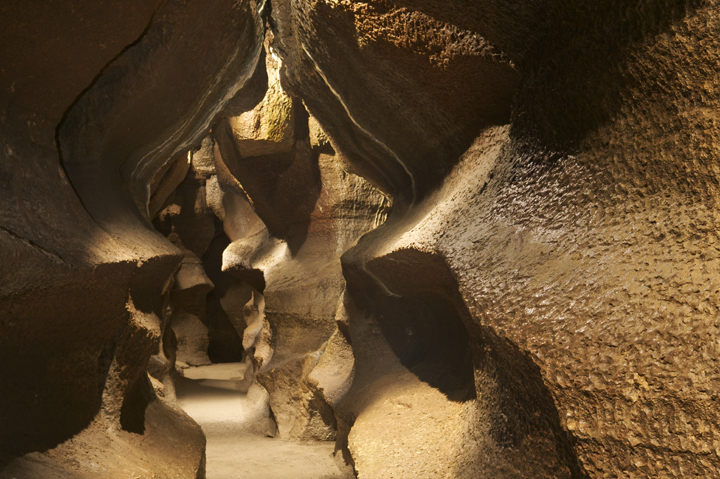
Niagara Cave near Harmony, Minnesota, in the bluff country of the state’s southeastern corner, is one of the most impressive natural attractions in the Upper Midwest and one of the best-kept secrets in a state full of them. While Minnesota’s lakes and forests get most of the attention, this massive limestone cavern hides an underground waterfall, a fossil sea, and a natural cathedral of stone that takes visitors completely by surprise. It has been welcoming the adventurous and the curious since its accidental discovery in 1924, and it remains one of those places that makes first-time visitors wonder why they’d never heard of it before.
How the Cave Was Found
The story of Niagara Cave’s discovery is the kind of thing that sounds like a tall tale but is thoroughly documented. In 1924, a group of pigs belonging to a local farmer wandered into a sinkhole and disappeared. When farmers investigated, they found an opening that led into a vast underground chamber. The pigs were recovered, and the cave that swallowed them went on to become one of southeastern Minnesota’s most beloved attractions. The sinkhole entrance was eventually replaced by a constructed entrance tunnel, but the cave itself remains exactly as nature made it.
The cave formed in the same way as most Midwestern limestone caverns: slightly acidic groundwater slowly dissolving the bedrock over millions of years, creating passages and chambers that grew steadily larger over geological time. The cave sits in Ordovician-age limestone that is roughly 450 million years old, and the walls are embedded with the fossilized remains of sea creatures from the shallow tropical sea that covered this region in the ancient past. Coral, crinoids, and brachiopods are visible throughout the cave walls, making the tour as much a paleontology lesson as a geology one.
The Highlight: A 60-Foot Underground Waterfall
The undisputed centerpiece of Niagara Cave is its namesake waterfall, a 60-foot cascade that drops through a narrow shaft in the cave ceiling into a pool below. Visitors stand on a bridge spanning the chasm and look up at the falling water in a space so acoustically lively that the sound fills the entire chamber. The combination of the waterfall’s height, the mist it generates, and the dramatic lighting installed throughout the cave makes this one of the most memorable natural sights in Minnesota. It’s genuinely difficult to take a bad photograph here.
The waterfall flows year-round, fed by the groundwater that percolates through the limestone above. In spring, when snowmelt increases the flow, the falls are at their most powerful. The cave maintains a constant temperature of 48 degrees Fahrenheit throughout the year, making it a cool summer retreat and a relatively mild winter destination.
The Tour Experience
Guided tours of Niagara Cave run throughout the day during the operating season and take approximately one hour to complete. The trail through the cave is paved and well-lit, making it accessible for most visitors, though some sections require ducking under low ceilings and navigating narrow passages that add a genuine sense of adventure to the experience. The tour covers about half a mile of underground passages, passing through chambers of varying size and character before reaching the wedding chapel, a naturally formed alcove that has hosted hundreds of actual weddings over the decades.
The guides at Niagara Cave are knowledgeable and enthusiastic, presenting the geology, paleontology, and history of the cave in ways that engage visitors of all ages. Children in particular tend to be captivated by the fossils embedded in the walls and the theatrical darkness of the deeper cave sections. The gem sluicing activity available near the entrance is a popular add-on for families.
Harmony and the Bluff Country Surrounding It
The town of Harmony sits in Minnesota’s Driftless Area, a region that escaped glaciation and therefore retains a rugged, hilly character unique in the state. The surrounding landscape of steep wooded bluffs, spring-fed streams, and small farms is beautiful in every season, with fall foliage particularly spectacular in late September and early October. Harmony itself is the heart of a significant Amish community, and the roads surrounding the town are shared with horse-drawn buggies. Several Amish farms and bakeries in the area welcome visitors, and Amish-made furniture, quilts, and food products are available throughout the region.
The Root River State Trail, one of Minnesota’s finest paved cycling paths, passes through the nearby towns of Lanesboro, Whalan, and Peterson, connecting the bluff country communities along the Root River valley. Combining a cave tour at Niagara with a bike ride on the Root River Trail and a meal in Lanesboro makes for one of the finest day trips available in southern Minnesota.
Getting There
Niagara Cave is located at 29842 County Road 30, about 2 miles southwest of Harmony, Minnesota. Harmony is roughly 180 miles southeast of Minneapolis via U.S. Highway 52. The cave is open daily from May through October, with the season occasionally extending depending on weather. Admission is charged, with reduced rates for children. The cave is closed in winter. Sweaters or light jackets are recommended regardless of outside temperature, as the cave’s constant 48 degrees can feel cool after time on a warm summer day.
Niagara Cave is exactly the kind of place that makes a road trip through Minnesota feel like genuine exploration. The underground waterfall alone is worth the drive, and the surrounding bluff country ensures that the journey there is as rewarding as the destination. Put it on your list for the next time you find yourself in the southeastern corner of the state.