Tucked between the urban landscapes of Cleveland and Akron, Cuyahoga Valley National Park is one of the most visited national parks in the country, and one of the most surprising. Unlike the remote wilderness parks of the West, Cuyahoga Valley sits in the middle of a densely populated region, offering millions of Northeast Ohio residents a genuine national park experience within easy reach of home. But don’t mistake accessibility for a lack of beauty or substance. The park’s rolling hills, deep forests, rushing waterfalls, and historic canal corridor make it a genuinely wonderful destination for hikers, cyclists, history buffs, and nature lovers of every kind.
The Cuyahoga River and the Valley
The park takes its name from the Cuyahoga River, which winds through the valley in a series of broad, lazy bends. The river has an interesting claim to fame: it caught fire multiple times in the 20th century due to industrial pollution, most famously in 1969, and that fire helped galvanize the modern environmental movement and led to the passage of the Clean Water Act. Today the river is dramatically cleaner and supports a recovering ecosystem. Bald eagles, great blue herons, and river otters are all present in the valley, a testament to how significantly the environment has improved in recent decades.
The valley itself was carved by glaciers during the last ice age, and its steep walls of Berea sandstone and shale give it a more dramatic topography than most people expect from Ohio. Ravines and side valleys branch off from the main corridor, each with its own character of forest, stream, and rock. The combination of the valley’s sheltered microclimate and the variety of habitats within it creates exceptional biodiversity, with more than 900 plant species and hundreds of bird species recorded within park boundaries.
Brandywine Falls
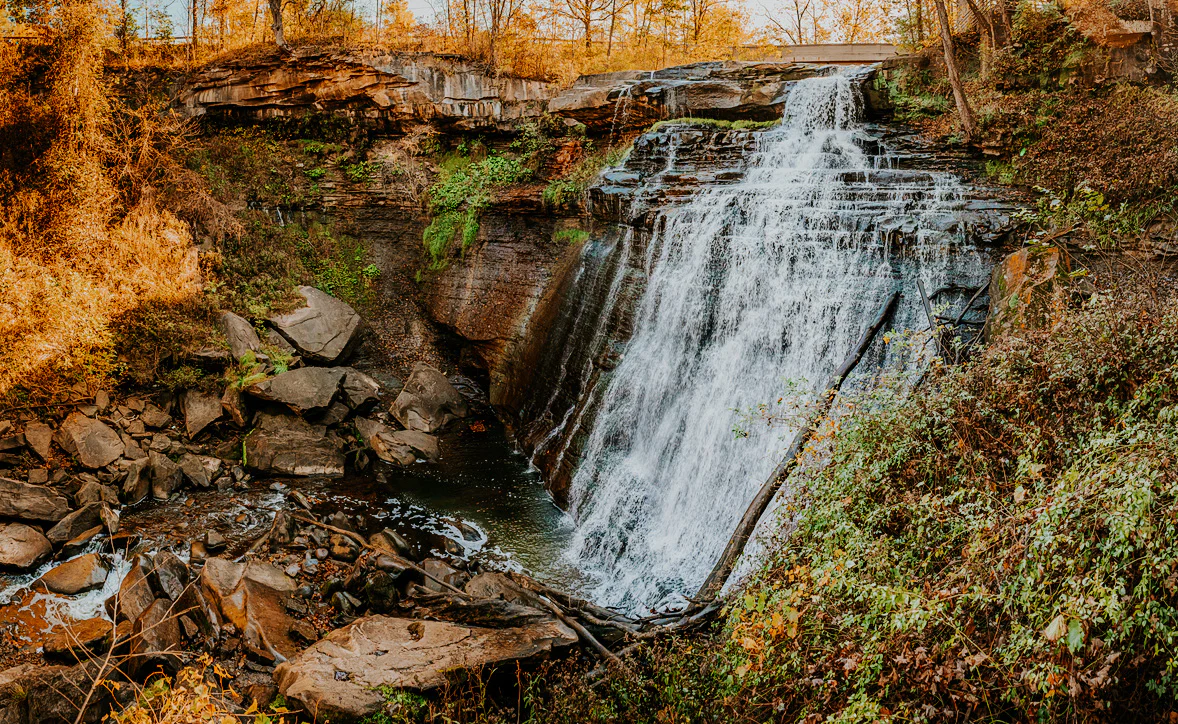
Brandywine Falls is the most iconic sight in Cuyahoga Valley National Park and arguably the most photographed waterfall in Ohio. The falls drop 65 feet over a ledge of Sharon conglomerate and Bedford shale into a mist-filled gorge below. A well-maintained boardwalk trail leads from the parking area to multiple viewing platforms at different levels, offering both close-up views of the falls and broader perspectives from above. The hike is short, less than 1.5 miles round trip, and suitable for visitors of all ages and abilities. A historic inn sits just steps from the trailhead, adding a touch of history to the experience.
The falls are beautiful in every season. In summer, the surrounding forest is lush and green and the sound of the water is thunderous. In winter, the falls often partially freeze, creating dramatic curtains and columns of ice that attract photographers from across the region. Spring floods send the water roaring over the ledge with tremendous force, while autumn surrounds the scene in warm golden and red foliage.
The Ohio and Erie Canal Towpath Trail
Running the length of the park along the route of the historic Ohio and Erie Canal, the Towpath Trail is the park’s backbone and one of the finest multi-use trails in the Midwest. The canal was completed in 1832 and played a crucial role in Ohio’s development, linking the Ohio River to Lake Erie and opening the state’s interior to commerce. By the late 19th century, the railroads had largely displaced the canal, but the towpath where mules once pulled canal boats has been preserved and transformed into a 20-mile recreational trail within the park.
The Towpath Trail is flat, well-surfaced, and extremely user-friendly, making it popular with cyclists, joggers, and casual walkers of all ages. Along the way, you’ll pass restored canal locks, historic structures, meadows full of wildflowers, and quiet stretches of the Cuyahoga River. Canal Visitor Center near the town of Valley View offers exhibits on the canal’s history and is a good starting point for exploring the trail.
Hiking Beyond the Towpath
While the Towpath gets the most traffic, Cuyahoga Valley has more than 125 miles of additional trails ranging from easy nature walks to moderately challenging ridge hikes. The Ledges area in the southern part of the park features dramatic outcroppings of Sharon conglomerate that form cave-like overhangs and narrow passages, making it one of the most geologically interesting sections of the park. The Ledges Trail is a popular 2.2-mile loop that visits several of the most impressive rock formations.
The Stanford Trail, the Buckeye Trail, and the Boston Run Trail are among the longer routes that connect different parts of the park and provide more immersive backcountry experiences. The park also has excellent mountain biking on designated trails in the Kendall Lake area.
The Cuyahoga Valley Scenic Railroad
One of the most distinctive ways to experience the park is aboard the Cuyahoga Valley Scenic Railroad, a heritage railroad that operates excursion trains through the valley between Independence and Akron. Various themed excursions are offered throughout the year, including photography trips, brunch runs, and family-friendly seasonal events. The Bike Aboard program allows cyclists to load their bikes onto a train car, ride to a station deeper in the valley, and then cycle back along the Towpath, a wonderfully efficient way to explore the park.
Getting There and Planning Your Visit
Cuyahoga Valley National Park stretches between Interstate 77 on the west and State Route 8 on the east, with multiple access points from both Cleveland and Akron. The park has no admission fee. The Boston Mill Visitor Center on Riverview Road is the main visitor center and a good first stop for maps and information. The park is busy on weekends throughout the year, so arriving early is advisable, especially at popular spots like Brandywine Falls, where the parking lot fills quickly on nice days.
Cuyahoga Valley National Park is proof that a great national park experience doesn’t require a cross-country flight or a week of vacation. For Ohioans, it’s a backyard treasure. For visitors from elsewhere, it’s a genuinely pleasant surprise, a park with real beauty, real history, and real wildness, all wrapped up in a green valley a short drive from the highway. It deserves far more attention than it typically gets outside Ohio, and it rewards every visit.