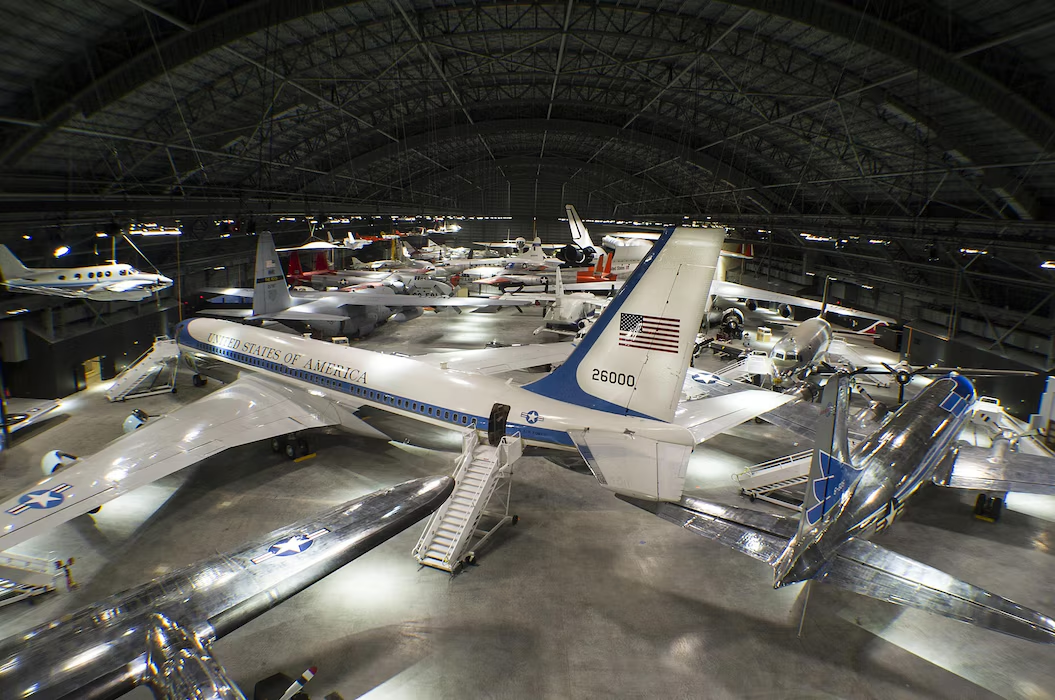
On the grounds of Wright-Patterson Air Force Base near Dayton, Ohio, a museum of extraordinary scale and depth chronicles the full history of American military aviation from the Wright Brothers’ first flight to the latest generation of stealth aircraft. The National Museum of the United States Air Force is the oldest and largest military aviation museum in the world, and admission is always free. It is, without exaggeration, one of the finest museums in the United States and a destination that aviation enthusiasts from around the world travel to Ohio specifically to visit.
The Scale of the Collection
The museum’s collection includes more than 360 aircraft and missiles displayed across four enormous hangars and an outdoor area. The exhibits span the full history of powered flight, from fabric-and-wire biplanes of the early 20th century to supersonic jets and strategic bombers. Unlike many aviation museums where aircraft are crowded together or displayed in less-than-ideal conditions, the Air Force Museum has the space and the curatorial commitment to display its aircraft in context, with period-appropriate equipment, uniforms, vehicles, and interpretive materials surrounding each major exhibit.
The museum is divided into four main galleries: Early Aviation and World War I, World War II, Korea and the Cold War, and the Modern Flight gallery. Each covers the relevant technological and historical developments of its era with thoroughness and clarity. Additional special galleries cover specific topics including Presidential Aircraft, Space, and Research and Development.
World War II Highlights
The World War II gallery is widely considered one of the finest aviation history exhibits in the world. Full-size aircraft from all theaters of the war are displayed in dramatic settings that recreate the operational environments of wartime. The B-17 Memphis Belle, one of the most famous heavy bombers of the war, is displayed in a carefully restored condition that preserves her combat markings. The Bockscar, the B-29 that dropped the atomic bomb on Nagasaki, is another centerpiece that draws enormous crowds. German, Japanese, Italian, and other Axis aircraft are displayed alongside Allied planes, providing a comprehensive overview of the air war’s technological competition.
The detailed dioramas, period vehicles, and extensive use of photographs and documents throughout the World War II gallery elevate it above a simple collection of aircraft into a genuine historical narrative. Visitors who have any connection to the war through family history invariably find deeply affecting personal connections in these exhibits.
Presidential Aircraft Gallery
One of the museum’s most popular and distinctive galleries houses the aircraft used to transport American presidents since the early post-World War II era. The iconic blue and white SAM 26000, the Boeing VC-137C that served as Air Force One for Presidents Kennedy through Nixon, is the gallery’s centerpiece. The specific aircraft in which President Kennedy’s body was returned to Washington after his assassination in 1963, and aboard which Lyndon Johnson was sworn in as president, is on display here in its original configuration. The emotional weight of this aircraft is considerable, and the gallery’s presentation of its history is appropriately serious and respectful.
Other presidential aircraft in the collection include the Sacred Cow, the C-54 used by President Roosevelt during World War II and the first dedicated presidential aircraft, and the Columbine III, Eisenhower’s personal aircraft. Together they trace the evolution of presidential air transport and offer fascinating glimpses into the technology and culture of the mid-20th century.
Space Gallery and Research Aircraft
The museum’s Space Gallery features an impressive collection of spacecraft, missiles, and related equipment including a Minuteman missile in its original launch silo, a collection of intercontinental ballistic missiles, and spacecraft recovered from actual missions. The Research and Development Gallery is a treasure trove for aviation technology enthusiasts, housing experimental aircraft including the famous X-planes that pushed the boundaries of flight performance and led to the modern high-performance aircraft in operational service today.
Dayton Aviation Heritage and the Wright Brothers
Visiting the Air Force Museum in the context of Dayton’s aviation heritage makes the experience even richer. Dayton is the hometown of Orville and Wilbur Wright, who conceived and built the first successful powered airplane in their bicycle shop on West Third Street. The Dayton Aviation Heritage National Historical Park preserves the Wright Brothers’ bicycle shop, the printing shop where they learned mechanical skills, and Huffman Prairie Flying Field, where they developed and refined their flying machine over two years following the Kitty Hawk flights. These sites are just a short drive from the Air Force Museum and together they tell the complete story of American aviation from its very beginnings.
Practical Information
The National Museum of the U.S. Air Force is located at 1100 Spaatz Street on Wright-Patterson Air Force Base, about 6 miles northeast of downtown Dayton via Interstate 675. Admission to the museum is always free, though donations are encouraged. The museum is open daily from 9 a.m. to 5 p.m., closed Thanksgiving and Christmas. Ample free parking is available. A cafeteria inside the museum provides basic dining options. Plan a full day for a thorough visit; many aviation enthusiasts return multiple times to cover the collection adequately.
The National Museum of the U.S. Air Force is a national treasure that happens to be located in Ohio. For anyone with any interest in aviation, military history, or American technology, it is one of the finest museum experiences in the country. That it’s always free makes it all the more remarkable. Put it on your Ohio itinerary without hesitation, and give it all the time it deserves.