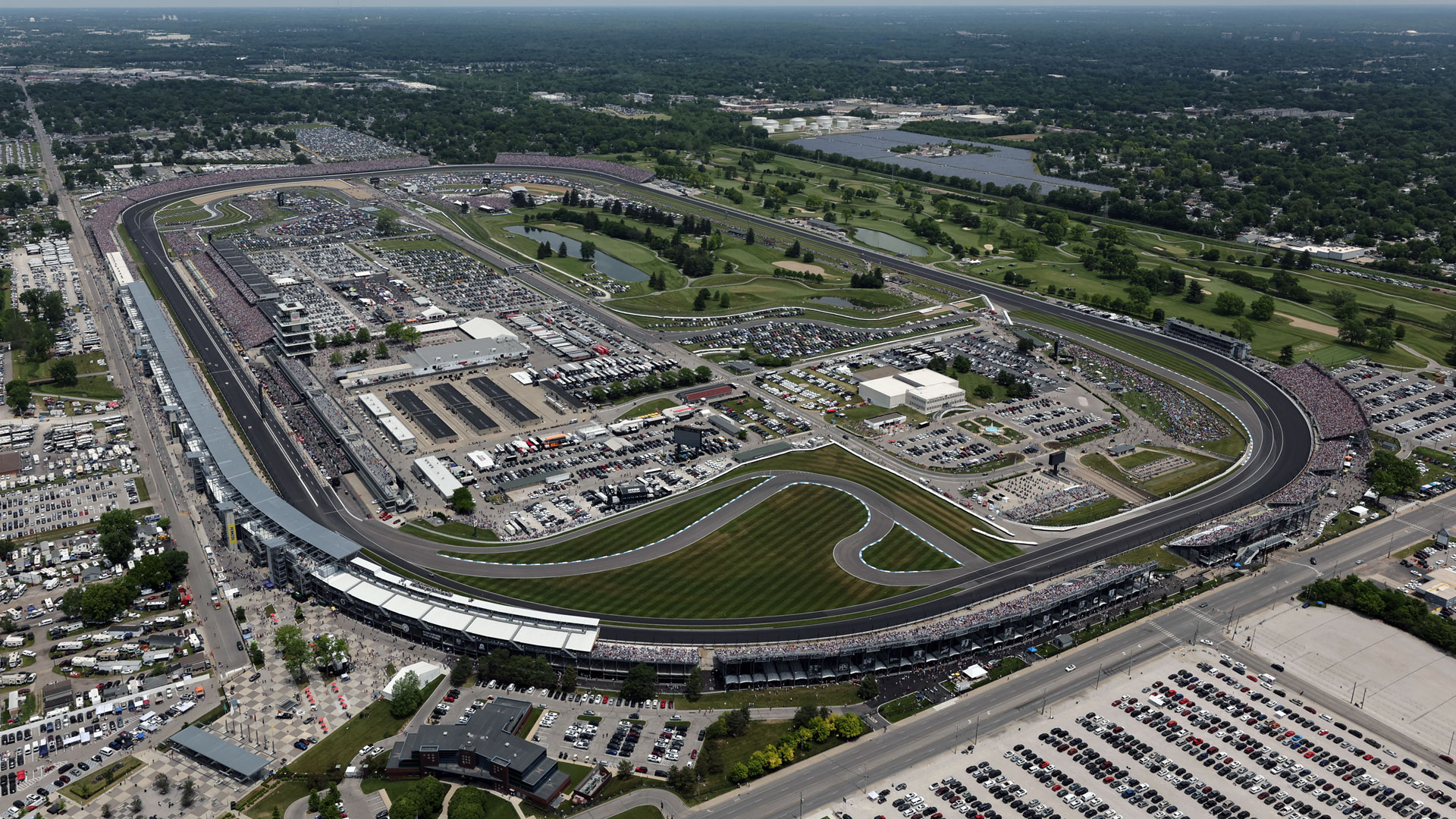
On a stretch of West 16th Street in Speedway, Indiana, a suburb that sits entirely within Indianapolis, stands one of the most iconic venues in all of sports. The Indianapolis Motor Speedway is home to the Indianapolis 500, the single largest single-day sporting event in the world, and for racing fans, it occupies a near-sacred place in the culture of American motorsport. Whether you’re visiting on a race weekend or a quiet weekday in the off-season, the Speedway has a way of making even non-racing fans feel the weight of its history and the thrill of what happens here every May.
The Scale of the Speedway
The first thing that strikes most visitors to Indianapolis Motor Speedway is its sheer size. The 2.5-mile oval track encloses a massive infield that contains a golf course, a lake, a museum, and enough interior space to fit several major sports stadiums side by side. The grandstands surrounding the oval have a seating capacity of around 250,000, making it the highest-capacity sports venue on earth. On race day, with the infield crowd added to the grandstand count, total attendance at the Indianapolis 500 regularly exceeds 300,000 people. Standing in the middle of the front straight and looking up at the tiered grandstands rising on all sides, you get a visceral sense of the event’s scale that photographs simply cannot convey.
The Indianapolis Motor Speedway Museum
The IMS Museum, located in the infield of the track, is one of the finest motorsports museums in the world and is the primary attraction for visitors who come outside of race season. The museum’s collection spans the entire history of the Indianapolis 500, from the earliest brick-paved races in 1911 to the present day. More than 30 Indy 500-winning cars are on display, including the original 1911 winner driven by Ray Harroun and iconic machines piloted by A.J. Foyt, Al Unser, Rick Mears, and Helio Castroneves.
Beyond the winning cars, the museum displays a remarkable collection of vintage racing vehicles, engines, driver equipment, trophies, and memorabilia that tells the full story of the race and the circuit. The Borg-Warner Trophy, the enormous silver trophy awarded to the winner of each Indianapolis 500 since 1935, is prominently displayed. Each winning driver’s face is sculpted in relief on the trophy in a tradition that makes it one of the most distinctive awards in sports. The museum also covers the history of the track itself, including its construction in 1909, the transition from gravel to brick to asphalt paving, and the various record-setting moments in its history.
Track Tours and Experiences
For visitors who want to get closer to the action, the Speedway offers a variety of experiences beyond the museum. Bus tours of the facility take guests onto the actual race surface and around the infield, providing an extraordinary perspective on the track’s layout and the banking of its four turns. Standing on the front straight, looking down the flat concrete toward Turn 1, with the grandstands towering overhead, is genuinely spine-tingling.
For the ultimate fan experience, the Speedway offers hot laps in a two-seat Indy car, allowing passengers to ride around the full oval at race speeds with a professional driver at the wheel. These experiences are not cheap, but for serious racing fans, there is arguably nothing else quite like it. Racing school programs also operate at the track for those who want to try driving themselves. The iconic Yard of Bricks, the one-yard strip of the original brick track surface that still crosses the start-finish line, is a traditional destination for visitors who want a photograph on race-historic ground.
The Month of May
The entire month of May is dedicated to preparations for the Indianapolis 500, which takes place on the Sunday of Memorial Day weekend. Practice sessions and qualifying runs fill the first three weeks of the month, and all of these sessions are open to the public at significantly lower ticket prices than race day. Watching a car qualify for the 500, screaming through the corners at speeds approaching 230 miles per hour, is a thrilling experience available for the cost of a general admission ticket.
Race day itself is one of the great spectacles in American sport. The pre-race ceremonies are elaborate and deeply traditional, including the singing of Back Home Again in Indiana, the command to start engines, the pace lap led by a celebrity pace car driver, and the roar that erupts when the green flag drops. If you have the opportunity to attend the race even once in your life, it belongs on your bucket list.
Beyond Race Season
The Indianapolis Motor Speedway hosts additional events beyond the Indy 500. The Verizon IndyCar Series returns to the track for the Brickyard Grand Prix road course race in late summer. NASCAR has raced at the Speedway since 1994, with the Brickyard 400 drawing large crowds annually. Concerts, special events, and charity runs also take place on the property throughout the year, keeping the venue active outside of the core racing season.
Getting There
The Indianapolis Motor Speedway is located at 4790 West 16th Street in Speedway, Indiana, just a few miles west of downtown Indianapolis. It’s easily accessible by car, and the surrounding Speedway neighborhood has a variety of restaurants and bars catering to racing fans. On non-event days, parking at or near the museum is straightforward. The museum is open year-round, with slightly reduced hours in winter months. Admission is charged for the museum, and bus tours are available for an additional fee.
The Indianapolis Motor Speedway transcends sport. It is a piece of American history, a monument to speed and engineering and competition, and a place where the roar of an engine becomes something close to poetry. Whether you’re a lifelong racing fan or someone who has never given motorsport a second thought, a visit to IMS is likely to shift your perspective. The place has a gravity all its own.