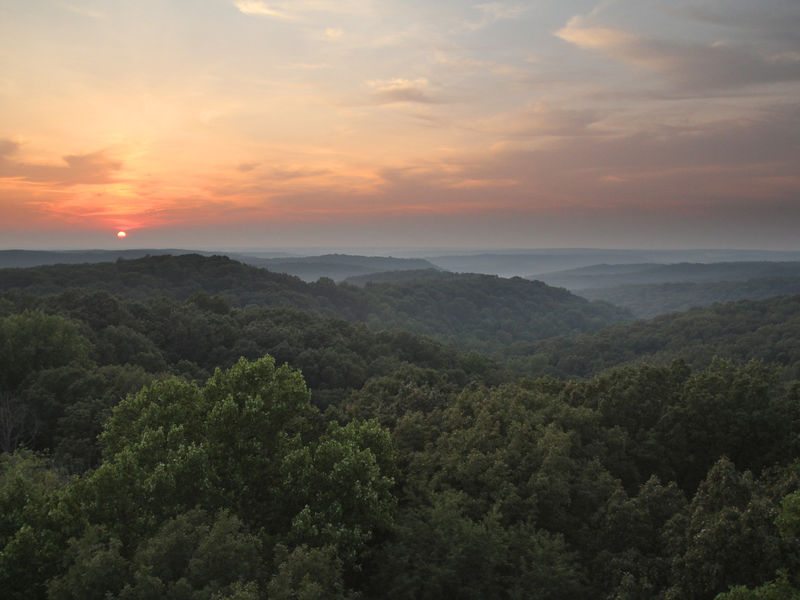
Hoosier National Forest in south-central Indiana is the state’s only national forest and covers more than 200,000 acres of the hill country between Bloomington and the Ohio River. It’s not a place that gets much national attention, but for outdoor enthusiasts who know it, the forest offers a genuine wilderness experience in a state better known for flat farmland. Old-growth trees, clear streams, sandstone bluffs, and an unusual combination of habitats all intersect in the Hoosier Hills, creating a backcountry that rewards explorers with everything from good rock climbing to excellent birding to some of the finest wildflower displays in the Midwest.
The Backcountry Character
The Hoosier National Forest occupies the unglaciated hill country of southern Indiana, a region that was bypassed by the last ice age’s leveling influence and therefore retains a rugged, hilly character unlike the rest of the state. The hills, locally called knobs, are formed from erosion-resistant sandstone and siltstone, and the ravines between them carry clear-water streams through a mix of upland oak-hickory forest and bottomland hardwoods. Old-growth forest remnants survive in several protected areas within the forest, providing glimpses of what Indiana’s pre-European landscape looked like.
The Charles C. Deam Wilderness, the state’s only designated wilderness area, occupies about 13,000 acres within the northern portion of the national forest and provides a truly roadless backcountry experience in Indiana. The wilderness has about 36 miles of trails ranging from easy ridgeline walks to challenging ravine scrambles, and backcountry camping is permitted throughout. Spending a night in the Deam Wilderness, with the sounds of the forest replacing the background hum of civilization, is one of those experiences that Indiana residents often don’t know is available in their own state.
Pioneer Mothers Memorial Forest
Within the national forest, the Pioneer Mothers Memorial Forest is one of the finest old-growth forest remnants in Indiana and one of the best examples of original Indiana forest in existence. The 88-acre preserve contains tulip poplars, white oaks, sugar maples, and beech trees that have never been logged, with the largest specimens reaching heights of 150 feet and diameters of several feet. Walking through the Pioneer Mothers Forest, with its cathedral canopy and the absence of the tangled undergrowth that characterizes managed forests, feels like being in a different world from the surrounding landscape.
The forest is named for the pioneer women of southern Indiana and has been protected since the 1940s through the efforts of local conservationists and the Indiana Daughters of the American Revolution. It is a National Natural Landmark and deserves to be far better known than it is.
Hemlock Cliffs
The Hemlock Cliffs recreation area in the southern portion of the national forest is one of the most scenically spectacular spots in Indiana. A short loop trail descends from the forest rim into a narrow sandstone canyon where a waterfall drops over the clifftop, hemlocks cling to the moist canyon walls, and the stone overhangs create sheltered alcoves that feel reminiscent of the Hocking Hills of Ohio. The canyon retains snow and ice well into winter, and the hemlock microclimate keeps it cool and damp even during Indiana summer heat. The 2-mile loop is manageable for most hikers and provides concentrated scenery well above what the trail’s difficulty would suggest.
Recreation and Access
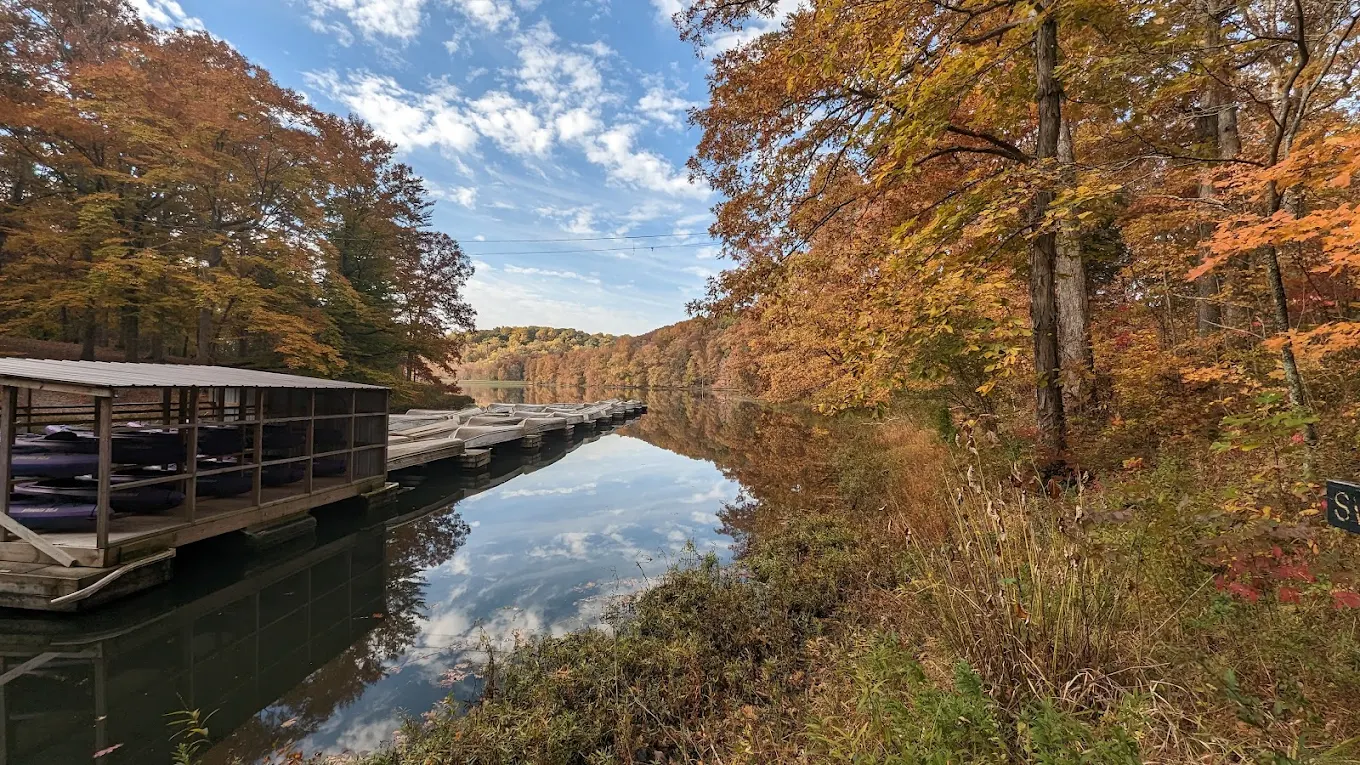
The Hoosier National Forest has multiple recreation areas providing camping, hiking, and lake swimming. Lake Monroe, the largest inland lake in Indiana, borders the northern edge of the forest and has excellent water recreation, including sailing, motorboating, and fishing for bass, crappie, and striped bass. The town of Paoli, near the forest’s center, is the main gateway community and has good services for visitors. Bloomington, home of Indiana University, is about 30 miles north of the forest’s northern boundary and has the broadest range of lodging, dining, and supplies in the region.
The forest’s two ranger districts, the Brownstown District in the north and the Tell City District in the south, each have visitor contact stations where forest maps and information are available. The Hoosier National Forest website maintains current trail conditions and camping availability information. The forest has no entrance fee, and dispersed camping is permitted in most areas outside designated campgrounds.
Hoosier National Forest is Indiana’s quiet backcountry, the corner of the state where the hills run long and the forest closes in around the trails and the towns seem far away. For Hoosiers who feel their state has no wild places worth seeking out, a day in the Hemlock Cliffs or a night in the Deam Wilderness is a reliable corrective. This forest is worth your time.